Understanding how much is a rifle involves more than just the firearm’s price tag. Costs vary dramatically based on rifle type, brand, features, and whether it’s new or used, ranging from a few hundred dollars to several thousand. Beyond the rifle itself, you’ll need to budget for essential accessories like optics, a case, and most importantly, ammunition, as well as potential training and maintenance.
So, you’re curious about “how much is a rifle?” It’s a fantastic question, but the answer is a lot like asking “how much is a car?” — it depends entirely on what kind of car you’re looking for, its features, brand, and whether it’s new or used. Rifles come in an astonishing variety, each designed for different purposes, and their price tags reflect that diversity.
Whether you’re looking to get into hunting, sport shooting, self-defense, or simply curious about firearms, understanding the financial commitment involved is key. It’s not just about the rifle itself; there’s a whole ecosystem of accessories, ammunition, training, and maintenance that contributes to the overall cost of rifle ownership. Let’s break down everything you need to know to budget realistically for your rifle journey.
Key Takeaways
- Rifle Prices Vary Widely: The cost of a rifle can range from as little as $200-$300 for basic models to over $5,000 for high-end, specialized, or custom firearms, depending on type, brand, materials, and features.
- Accessories Are Essential Costs: Beyond the rifle, expect to spend an additional $200-$1000+ on crucial accessories such as optics (scopes/red dots), magazines, a quality gun case, cleaning kits, and slings.
- Ammunition is an Ongoing Expense: Ammunition costs are a significant factor, varying by caliber and type, and will be a recurring expense for practice and use, potentially adding hundreds of dollars annually.
- Training and Range Time are Important Investments: Budget for range fees ($15-$30 per visit) and consider professional training courses ($100-$500+) to ensure safe and proficient handling, enhancing your overall ownership experience.
- New vs. Used Offers Different Values: Buying used can save you money, but requires careful inspection and awareness of FFL transfer fees. New rifles come with warranties and the latest features.
- Factors Like Brand, Material, and Rarity Impact Price: Premium brands, high-quality materials (e.g., carbon fiber, precision-machined steel), advanced features, and limited availability significantly drive up a rifle’s price.
Quick Answers to Common Questions
What is the cheapest type of rifle to buy?
The cheapest type of rifle to buy is typically a .22LR rimfire rifle, with basic models starting around $200-$300.
Do I need a special license to buy a rifle?
In most of the U.S., you don’t need a special license beyond passing a standard background check through a licensed firearms dealer (FFL). However, some states and localities have additional licensing or permit requirements.
How much does rifle ammunition typically cost?
Rifle ammunition costs vary significantly. .22LR can be $0.06-$0.10 per round, while common centerfire calibers like .223/5.56 or .308 range from $0.40-$0.70 per round for target ammo, and premium rounds can exceed $3-$5 per round.
Can I buy a used rifle to save money?
Yes, buying a used rifle can save you significant money, often 20-40% off the new price. Always inspect it thoroughly and complete the sale legally through an FFL.
What is an FFL transfer fee, and how much is it?
An FFL (Federal Firearms License) transfer fee is charged by a licensed dealer to process the mandatory background check when you purchase a firearm, especially if buying online or from another state. These fees typically range from $25 to $75.
📑 Table of Contents
- The Many Faces of Rifles: Understanding Different Types and Their Price Tags
- Beyond the Rifle Itself: Essential Accessory Costs
- The Hidden Costs: Ammunition, Training, and Maintenance
- New vs. Used: Where Can You Find the Best Value?
- Factors That Drive Rifle Prices: What Makes One Rifle Cost More?
- Budgeting for Your Rifle Purchase: A Realistic Breakdown
- Conclusion: The True Cost of Rifle Ownership
The Many Faces of Rifles: Understanding Different Types and Their Price Tags
The first step in figuring out how much is a rifle is to pinpoint the type of rifle you’re interested in. Each category serves different needs and comes with its own general price range.
Bolt-Action Rifles: Precision and Hunting Workhorses
Bolt-action rifles are renowned for their accuracy, reliability, and relatively simple mechanics. They are a favorite among hunters and precision shooters due to their consistent performance. Because you manually cycle each round, they are typically slower to fire but incredibly precise.
- Entry-Level: For a basic, reliable hunting or target bolt-action rifle, you might spend anywhere from $300 to $600. Brands like Savage, Ruger American, and Mossberg Patriot offer excellent value here. These are often synthetic-stocked, no-frills firearms perfect for getting started.
- Mid-Range: Stepping up, $700 to $1,500 opens doors to rifles with better finishes, smoother actions, and improved accuracy guarantees from brands like Bergara, Tikka, and higher-end Remingtons or Winchesters. These often feature better triggers and more refined stocks.
- High-End/Precision: For serious precision shooting or custom builds, bolt-actions can easily run from $2,000 to $5,000 or even more. These rifles feature match-grade barrels, custom actions, advanced chassis systems, and highly adjustable stocks, from makers like GA Precision, Accuracy International, or custom gunsmiths.
Semi-Automatic Rifles: Versatility and Speed
Semi-automatic rifles fire one round with each pull of the trigger, automatically chambering the next round. This makes them faster to operate and popular for sport shooting, tactical applications, and sometimes even hunting (depending on local laws and caliber).
- AR-15 Style Rifles: The AR-15 platform is incredibly popular and versatile.
- Budget-Friendly: You can find entry-level AR-15s for $500 to $800 from brands like Palmetto State Armory (PSA) or Smith & Wesson (S&W M&P Sport II). These are functional and reliable for most users.
- Mid-Range: For $900 to $1,500, you’ll see improvements in components, fit and finish, and often better accuracy from brands like Aero Precision, BCM (Bravo Company Manufacturing), and mid-tier Springfields.
- High-End: Premium AR-15s, featuring advanced materials, custom triggers, and extremely tight tolerances from manufacturers like Daniel Defense, Geissele, and Knights Armament, can easily cost $1,800 to $3,000+.
- Other Semi-Autos (AK-47, PCCs, etc.):
- AK-style rifles typically range from $700 to $1,500, with prices varying based on country of origin and specific features.
- Pistol Caliber Carbines (PCCs) are often in the $600 to $1,200 range, offering a fun and often cheaper-to-shoot option.
Lever-Action Rifles: Classic Charm and Hunting Tradition
Lever-actions are iconic, often associated with the Old West and traditional hunting. They are typically chambered in pistol calibers or classic rifle calibers, offering a unique shooting experience.
- Standard Models: A new Marlin, Henry, or Winchester lever-action will generally cost $700 to $1,200. These are well-made, reliable firearms.
- Premium/Collector’s: Limited edition models, specific historical reproductions, or highly engraved versions can push prices to $1,500 to $3,000+.
Rimfire Rifles: Economical Fun and Training
Often chambered in .22LR, rimfire rifles are fantastic for beginners, plinking, small game hunting, and affordable practice. They are generally much cheaper to buy and shoot.
- Basic Models: A popular Ruger 10/22 or Savage Mark II can be had for $200 to $400. These are incredibly popular for a reason – reliable and endlessly customizable.
- Specialty/Precision Rimfire: More accurate or feature-rich rimfires, designed for competitive shooting, might cost $500 to $1,000+.
Beyond the Rifle Itself: Essential Accessory Costs
When you ask “how much is a rifle,” remember that the rifle is just the beginning. You absolutely need to budget for accessories. Skimping here can compromise safety, usability, and your shooting experience.
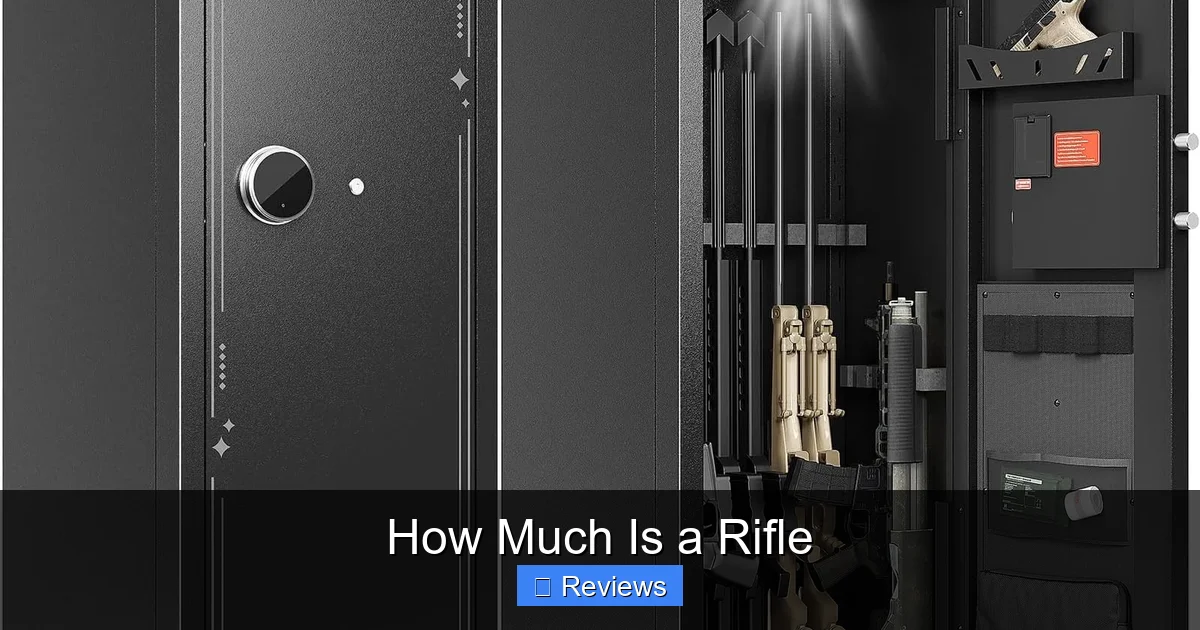
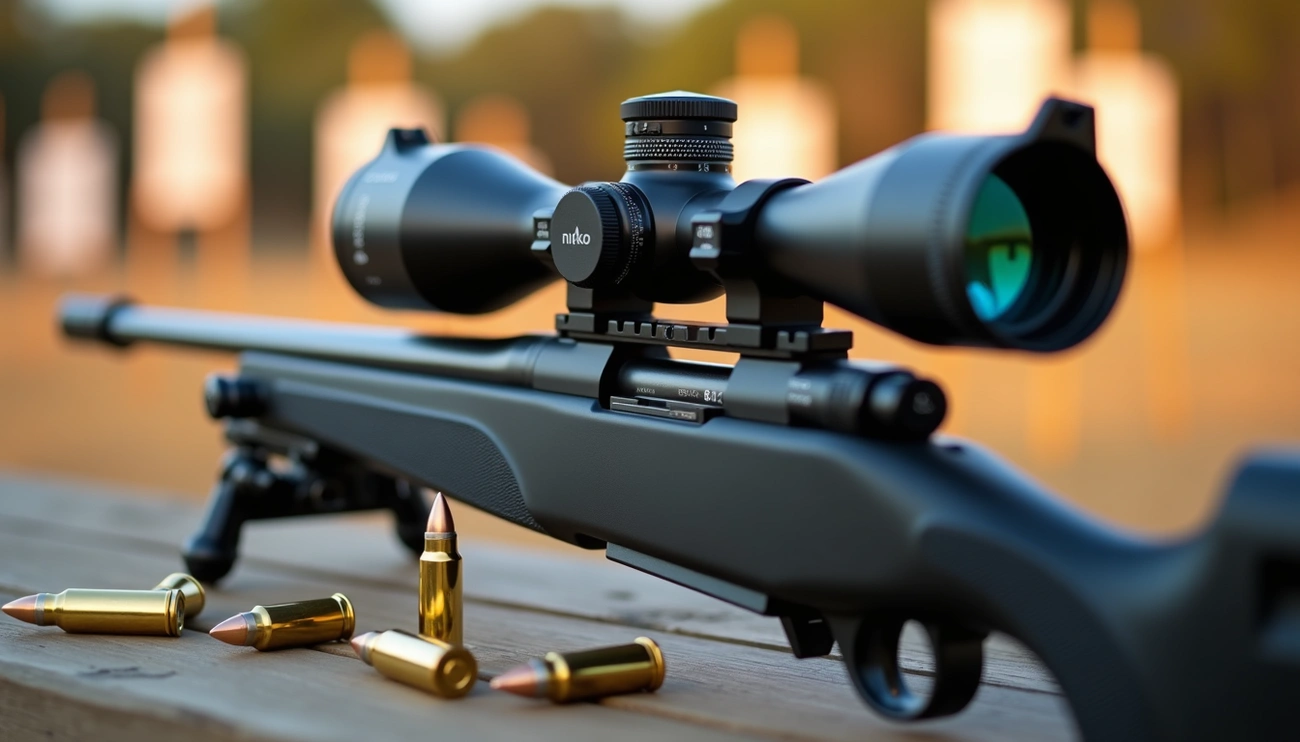
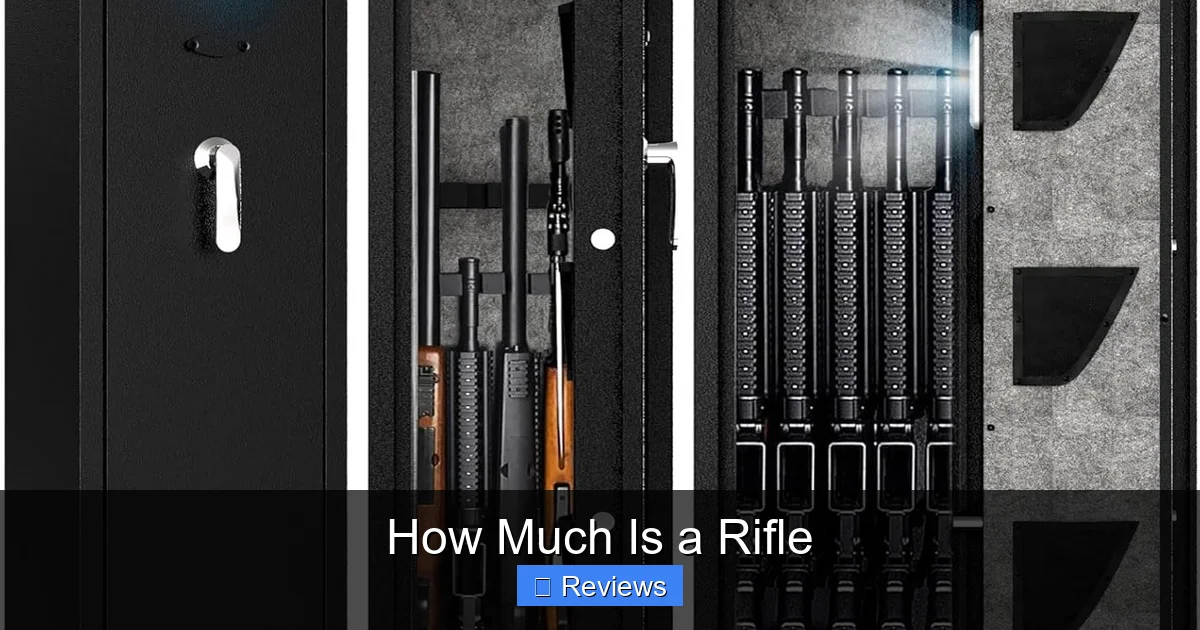
Visual guide about How Much Is a Rifle
Image source: m.media-amazon.com
Optics: Seeing is Believing (and Hitting)
Unless you’re planning to only use iron sights, an optic is a crucial addition. Prices vary massively based on type and quality.
- Scopes (for magnified shooting):
- Budget: A basic hunting scope might run $100-$250. It will get the job done but may lack clarity or durability.
- Mid-Range: For better light gathering, clarity, and features, expect $300-$800. Brands like Vortex, Leupold, and Primary Arms offer great options here.
- High-End/Precision: Top-tier scopes for long-range precision can easily cost $1,000-$3,000+ from brands like Nightforce, Schmidt & Bender, and premium Leupold lines.
- Red Dot Sights (for fast, close-range targeting):
- Budget: Functional red dots start around $100-$150.
- Mid-Range: Quality, durable options from brands like Holosun, Sig Sauer, and Vortex will be $200-$400.
- High-End: Military-grade durability and advanced features from Aimpoint or EOTech will be $500-$800+.
Tip: Always buy the best optic you can afford. It’s often said to spend as much on your optic as you did on your rifle, if not more, especially for precision shooting.
Magazines: More Rounds, More Fun
Most rifles don’t come with many magazines (often just one). Having several spares is practical for range days and self-defense. They usually cost $15-$50 each, depending on the rifle type and capacity. For an AR-15, buying 3-5 extra magazines would add $75-$250.
Gun Case: Protection and Transport
You’ll need a way to safely and legally transport your rifle. Cases protect against damage and prevent unauthorized access.
- Soft Cases: Good for basic transport to the range, usually $20-$80.
- Hard Cases: Essential for protecting optics, airline travel, or long-term storage, ranging from $50 for basic plastic to $300-$600+ for high-quality, weather-sealed, crush-proof cases like Pelican or SKB.
Cleaning Kit and Supplies: Keeping It Pristine
Proper maintenance ensures reliability and longevity. A basic cleaning kit with rods, brushes, patches, and solvents will cost $30-$70. Replenishing supplies will be an ongoing, but small, cost.
Sling: Carry with Comfort and Control
A good sling makes carrying a rifle much easier and can also aid in shooting stability. Expect to pay $20-$100 for a quality sling.
The Hidden Costs: Ammunition, Training, and Maintenance
While often overlooked, these ongoing costs are significant when considering “how much is a rifle” over its lifetime.
Ammunition: The Recurring Expense
This is where the costs can really add up. Ammunition prices fluctuate based on caliber, type (target vs. hunting), and market demand.
- Rimfire (.22LR): Inexpensive fun. You can often buy 500 rounds for $30-$50. This is why .22LR rifles are so popular for practice.
- Common Rifle Calibers (.223/5.56, .308/7.62×51): These are generally the most affordable centerfire rifle rounds.
- Target/Plinking Ammo: Expect $0.40 – $0.70 per round, meaning a box of 20 can be $8-$14.
- Premium Hunting/Match Ammo: Can easily be $1.00 – $3.00+ per round, making a box of 20 cost $20-$60+.
- Less Common/Magnum Calibers (.30-06, 6.5 Creedmoor, .300 Win Mag): These often start at $1.00 – $2.00 per round for basic target ammo, and $3.00 – $5.00+ per round for premium hunting or match-grade loads.
Example: If you shoot 100 rounds of .223 per month, that’s $40-$70 monthly, or $480-$840 annually, just for basic practice ammo.
Training and Range Fees: Investing in Skill and Safety
Owning a rifle means a responsibility to use it safely and proficiently. This requires practice and potentially professional instruction.
- Range Fees: Most indoor ranges charge $15-$30 per hour or per visit. Outdoor ranges might have annual memberships ranging from $100-$300.
- Training Courses: A beginner’s safety and marksmanship course might cost $100-$300 for a few hours. More advanced tactical or precision shooting courses can range from $400 to $1,000+ for multi-day instruction. This is an invaluable investment.
Maintenance and Repairs: Keeping Your Rifle Running
Beyond cleaning supplies, occasionally a rifle might need parts replaced or professional gunsmithing. While not a regular cost, it’s something to be aware of.
- Minor Parts: Small springs, pins, or specific components might be $5-$50.
- Gunsmithing: Labor rates can be $50-$100+ per hour for repairs, sight installation, or advanced cleaning.
New vs. Used: Where Can You Find the Best Value?
Deciding between a new or used rifle significantly impacts “how much is a rifle” for your initial outlay.
Buying New Rifles: Pros and Cons
- Pros: Full manufacturer’s warranty, pristine condition, latest features, often easier to find specific models.
- Cons: Highest upfront cost, depreciates once you take it home.
- Where to Buy: Local gun stores, big box sporting goods stores, online retailers (shipped to a local FFL).
Buying Used Rifles: Pros and Cons
- Pros: Significant cost savings (often 20-40% off new), opportunity to find rare or discontinued models, pre-owned rifles might come with accessories already installed (like a scope).
- Cons: No warranty, potential for hidden wear or damage, “as-is” condition, may require more thorough inspection.
- Where to Buy: Local gun stores (used section), online gun auction sites (GunBroker.com, Armslist), private sales (check local laws), gun shows.
Important Note: All firearm sales, whether new or used, typically require going through a licensed Federal Firearms License (FFL) dealer. This involves a background check and often a transfer fee, which can range from $25-$75.
Factors That Drive Rifle Prices: What Makes One Rifle Cost More?
Beyond the basic type, several factors influence how much is a rifle.
Brand Reputation and Heritage
Established brands known for quality, innovation, or historical significance (e.g., KAC, H&K, Accuracy International) command higher prices than newer or budget-oriented brands.
Materials and Construction Quality
- Stock Material: Synthetic (polymer) stocks are common and affordable. Wood stocks vary widely in price depending on the grade of wood. High-end aluminum or carbon fiber chassis systems can significantly increase costs for precision rifles.
- Barrel Quality: Forged barrels are standard. Hammer-forged, match-grade, or custom stainless steel barrels with specific contours and finishes (like fluting) add to accuracy and cost.
- Action and Trigger: Smoother, more precise actions (the internal mechanism) and crisp, adjustable triggers (like those from Timney or Geissele) are features of more expensive rifles.
Features and Technology
Integrated suppressor-ready barrels, advanced recoil mitigation systems, ambidextrous controls, modularity for customization, and specialized coatings all add to the price tag. For example, a rifle with a free-floated handguard will generally cost more than one with a standard, non-free-floated design, but often offers better accuracy.
Rarity, Collectibility, and Customization
Limited edition models, rifles with historical significance, or those from small custom shops can fetch premium prices. Custom-built rifles, tailored to a shooter’s exact specifications, can easily run into the thousands or tens of thousands of dollars.
Budgeting for Your Rifle Purchase: A Realistic Breakdown
Let’s put it all together. How much is a rifle, really, once you consider everything?
The “Budget-Minded” Setup ($500 – $1,000)
- Rifle: Basic bolt-action or entry-level AR-15 (e.g., Ruger American, S&W M&P Sport II) – $300-$600
- Optic: Basic red dot or entry-level magnified scope – $100-$200
- Accessories: Soft case, basic cleaning kit, 1-2 extra mags, cheap sling – $100-$200
- Ammunition: 2-3 boxes (40-60 rounds) – $30-$100
- FFL Transfer Fee (if applicable): $25-$75
- Total Initial Investment: ~$555 – $1175
This budget gets you a functional, safe, and enjoyable rifle setup. It’s a great starting point, especially if you opt for a rimfire rifle, which significantly reduces ammo costs.
The “Mid-Range Enthusiast” Setup ($1,500 – $3,000)
- Rifle: Quality bolt-action (Tikka, Bergara) or a mid-tier AR-15 (Aero Precision, BCM) – $800-$1,500
- Optic: Good quality magnified scope or durable red dot + magnifier – $400-$800
- Accessories: Hard case, quality cleaning kit, 3-5 extra mags, good sling, bipod – $200-$500
- Ammunition: 5-10 boxes (100-200 rounds) – $100-$400
- Training Course: Basic rifle safety/marksmanship – $150-$300
- FFL Transfer Fee: $25-$75
- Total Initial Investment: ~$1,675 – $3,575
This budget allows for better performance, durability, and a more comprehensive initial training experience. You’ll notice the difference in the shooting experience.
The “Premium/Precision” Setup ($3,500+)
- Rifle: High-end bolt-action or custom AR-15 – $2,000-$5,000+
- Optic: Top-tier precision scope – $1,000-$3,000+
- Accessories: Premium hard case, advanced cleaning tools, multiple high-quality mags, custom sling, precision bipod, rangefinder – $500-$1,000+
- Ammunition: Several boxes of match-grade ammo – $200-$500+
- Training Course: Advanced precision or tactical course – $500-$1,000+
- FFL Transfer Fee: $25-$75
- Total Initial Investment: ~$4,225 – $10,575+
This level is for serious competitors, long-range enthusiasts, or those who simply want the best available. The performance and features at this price point are exceptional.
Conclusion: The True Cost of Rifle Ownership
Understanding “how much is a rifle” truly means understanding the holistic investment. It’s more than just the initial purchase price of the firearm itself. From the type of rifle to the essential accessories, the ongoing cost of ammunition, and the invaluable investment in training, every element contributes to your overall experience.
Before making a purchase, clearly define your purpose for the rifle, set a realistic budget that includes all the associated costs, and prioritize safety and training above all else. Remember, a cheaper rifle with good training and quality accessories will serve you far better than an expensive rifle you can’t afford to shoot or maintain properly. Happy and responsible shooting!
🎥 Related Video: Best Budget Rifle on the Market?! PSA Sabre
📺 Tactical Advisor
Due to new rules and receiving strikes, I can no longer say and do a lot of things that show how my channel is supported. Please …
Frequently Asked Questions
How much should I budget for a beginner rifle setup?
For a beginner, a realistic budget for a complete rifle setup, including the rifle, a basic optic, essential accessories like a case and cleaning kit, and initial ammunition, would be approximately $500 to $1,000. This range allows for a reliable entry-level firearm and the necessary gear to get started safely.
Are optics always necessary, or can I use iron sights?
While optics are highly recommended for most rifle applications, especially for precision shooting or hunting at longer distances, many rifles come with or can be fitted with iron sights. Iron sights are perfectly adequate for close-range shooting, basic training, and provide a reliable backup if an optic fails.
What is the most important accessory to buy after the rifle itself?
The most important accessory to buy after the rifle is usually a quality optic (scope or red dot), followed closely by a sturdy gun case for safe transport and storage. Ammunition is also crucial, as you can’t shoot without it, and a cleaning kit ensures your rifle remains reliable.
Does the caliber of a rifle affect its price significantly?
Yes, the caliber can affect both the rifle’s initial purchase price and the ongoing cost of ammunition. Rifles chambered in very common calibers like .223/5.56 or .308 often have more competitive pricing due to higher production volumes, and their ammunition is generally more affordable and readily available than less common or magnum calibers.
How much does it cost to get professional training for a rifle?
Professional rifle training costs can vary widely based on the instructor’s experience, course length, and content. A basic safety and introductory marksmanship course might cost $100-$300 for a half or full day, while multi-day advanced tactical or precision shooting courses can range from $500 to over $1,000.
Is it cheaper to buy a rifle online or in a local gun store?
Buying a rifle online can often result in a lower base price due to competitive online retailers. However, you will still need to have the rifle shipped to a local Federal Firearms License (FFL) dealer, who will charge a transfer fee (typically $25-$75). When factoring in shipping and FFL fees, the total cost might be similar to or sometimes even higher than buying directly from a local gun store, especially if the local store offers a good deal.