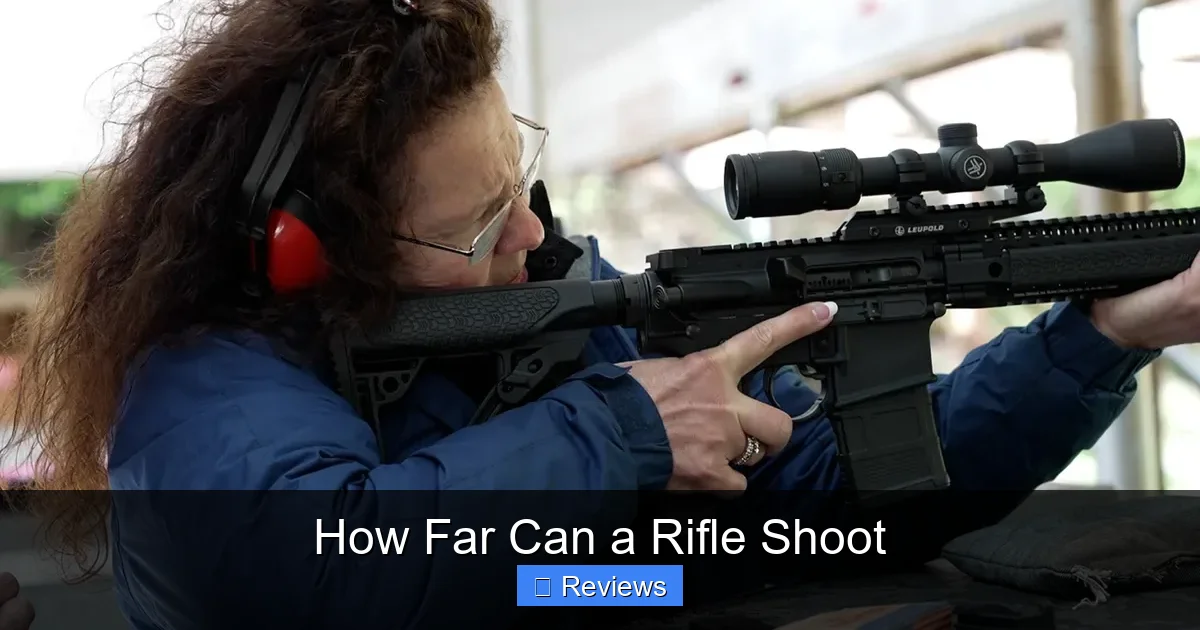
How far can a rifle shoot? The answer is complex, depending on many variables. Factors like the specific rifle, ammunition, shooter’s skill, and environmental conditions all play a crucial role in determining both the maximum range a bullet can travel and the effective range at which a shooter can consistently hit a target. Mastering these elements through practice and understanding ballistics is key to extending your rifle’s practical shooting distance.
Have you ever watched a movie where a sniper takes an impossible shot from what seems like miles away? Or perhaps you’re wondering about the capabilities of your own hunting rifle. The question “how far can a rifle shoot” is a common one. It sounds simple, doesn’t it? But the truth is, there’s no single, easy answer. It’s a bit like asking “how fast can a car go?” The answer depends on a lot of things!
Understanding how far a rifle can shoot involves looking at many different parts. We’re talking about the rifle itself, the type of ammunition it uses, the person pulling the trigger, and even the weather. All these things work together to determine how far a bullet will travel and, more importantly, how far you can accurately hit a target. Let’s break down this fascinating topic and explore what truly limits a rifle’s reach.
Whether you’re a seasoned shooter, a hunter, or just curious, getting a handle on these factors will give you a much clearer picture. We’ll cover everything from bullet design to wind conditions. You’ll soon see that extending your rifle’s effective shooting distance is a blend of science, skill, and careful planning. So, let’s dive in and uncover the real science behind how far a rifle can shoot.
Key Takeaways
- No Single Answer: The question of “how far can a rifle shoot” has no single answer. It depends heavily on multiple interacting factors.
- Key Influencers: The rifle’s design, the ammunition used, the shooter’s skill level, and environmental conditions are the four primary factors determining shooting distance.
- Effective vs. Maximum Range: Maximum range is how far a bullet can physically travel. Effective range is how far a shooter can consistently and accurately hit a target. Focus on effective range for practical shooting.
- Caliber Matters: Different rifle calibers are designed for different distances. Small calibers like .22LR are for short ranges, while .308 Win and 6.5 Creedmoor excel at long range.
- Skill is Paramount: Even with the best equipment, a shooter’s fundamental skills, understanding of ballistics, and consistent practice are crucial for achieving long-range accuracy.
- Optics and Tools Help: High-quality scopes, rangefinders, and ballistic calculators are essential tools for accurately engaging targets at extended distances.
- Safety First: Always know your bullet’s maximum travel distance and ensure a safe backstop. Never shoot without confirming your safe firing zone.
Quick Answers to Common Questions
What is the farthest a rifle bullet has ever been shot to hit a target?
The current record for the longest confirmed sniper kill is held by a Canadian JTF2 sniper, who hit an ISIS insurgent in Iraq at a distance of 3,871 yards (3,540 meters or 2.2 miles) in 2017, using a McMillan TAC-50 rifle.
Does barrel length affect how far a rifle can shoot?
Yes, generally, a longer barrel allows more time for propellant gases to accelerate the bullet. This often results in higher muzzle velocity, which contributes to a flatter trajectory and potentially greater effective range.
Is a higher ballistic coefficient better for long-range shooting?
Absolutely. A higher ballistic coefficient means the bullet is more aerodynamic. It experiences less air resistance, retains more velocity and energy, and is less affected by wind. This makes it ideal for shooting at longer distances.
Can a .22LR rifle shoot a mile?
A .22LR bullet can *travel* up to 1.5 miles (or about 2,400 meters) if fired at an optimal angle. However, its *effective* range for accurate shooting is typically only 50 to 150 yards due to significant bullet drop and wind sensitivity.
What is “dope” in long-range shooting?
“Dope” stands for “Data On Previous Engagements.” It refers to a shooter’s recorded ballistic data, including elevation and windage adjustments needed to hit targets at various distances under specific environmental conditions. It’s a crucial tool for consistency.
📑 Table of Contents
The Core Factors Influencing Rifle Range
Several key elements come into play when you think about how far a rifle can shoot. Imagine a chain. Each link needs to be strong for the chain to be effective. The same goes for shooting distance. Let’s look at the most important links in this chain.
The Rifle Itself
Your rifle is the starting point. Not all rifles are made equal when it comes to long-distance shooting.
- Barrel Length: A longer barrel generally allows the gunpowder gases more time to push the bullet. This means higher muzzle velocity. Higher velocity equals more distance and a flatter trajectory. A short carbine might shoot fine at 100 yards. But a rifle with a 24-inch or 26-inch barrel will often perform better at 600 yards and beyond.
- Barrel Quality and Twist Rate: A high-quality barrel helps ensure consistency. A rifle’s twist rate refers to how quickly the rifling inside the barrel spins the bullet. This spin stabilizes the bullet, much like a quarterback spins a football. The twist rate must match the bullet’s weight and length for optimal stability. An unstable bullet tumbles and loses accuracy quickly.
- Rifle System and Action: Bolt-action rifles are often preferred for long-range precision. They are generally more rigid and have fewer moving parts than semi-automatic rifles. This rigidity often leads to better inherent accuracy.
The Ammunition
The bullet you load into your rifle is arguably the biggest factor after the rifle itself. This is really about how far a rifle can shoot accurately.
- Bullet Weight and Design: Heavier bullets often retain their energy better over distance. They are less affected by wind. Streamlined, pointed bullets (like boat-tail designs) cut through the air more efficiently than flat-nosed or round-nosed bullets. This efficiency is called the “ballistic coefficient.” A higher ballistic coefficient means better long-range performance.
- Muzzle Velocity: This is the speed at which the bullet leaves the barrel. A faster bullet gets to the target sooner. It also drops less over a given distance. However, extremely high velocities can also cause bullets to become unstable or wear out barrels faster.
- Powder Charge and Consistency: The amount and type of gunpowder affect muzzle velocity. Consistent powder charges in each cartridge mean consistent performance. Inconsistent charges lead to inconsistent bullet speeds and poorer accuracy at distance.
The Shooter’s Skill
Even with the best rifle and ammo, the shooter is crucial. This is about how far a rifle can shoot in your hands.
- Fundamentals of Marksmanship: Proper stance, grip, sight picture, breathing control, and trigger control are essential. Any small error here gets magnified over distance. A tiny twitch at 100 yards could mean a complete miss at 500 yards.
- Understanding Ballistics: Knowing how a bullet flies is key. You need to understand bullet drop (gravity pulls the bullet down) and wind drift (wind pushes the bullet sideways). This knowledge helps you make corrections to your aim.
- Practice, Practice, Practice: There’s no substitute for time on the range. Consistent practice builds muscle memory and helps you anticipate and correct errors. Shooting long distances is a perishable skill.
Environmental Conditions
Mother Nature plays a huge role in how far a rifle can shoot accurately.
- Wind: Wind is the biggest challenge for long-range shooters. Even a light breeze can push a bullet significantly off course over hundreds of yards. Learning to “read” the wind is a critical skill.
- Temperature and Humidity: Air density changes with temperature and humidity. Denser air creates more drag on the bullet. Hot, humid air is less dense, meaning less drag and a slightly flatter trajectory.
- Altitude: At higher altitudes, the air is thinner. This means less drag on the bullet. Bullets will typically fly flatter and retain more energy at higher elevations than at sea level.
- Light Conditions: While not directly affecting ballistics, poor light can make it harder to see your target or your aiming point clearly. This impacts your ability to shoot accurately.
Understanding Effective Range vs. Maximum Range
When people ask how far a rifle can shoot, they often confuse two very different concepts: maximum range and effective range. It’s important to understand the difference.
Visual guide about How Far Can a Rifle Shoot
Image source: deerhuntingfield.com
What is Maximum Range?
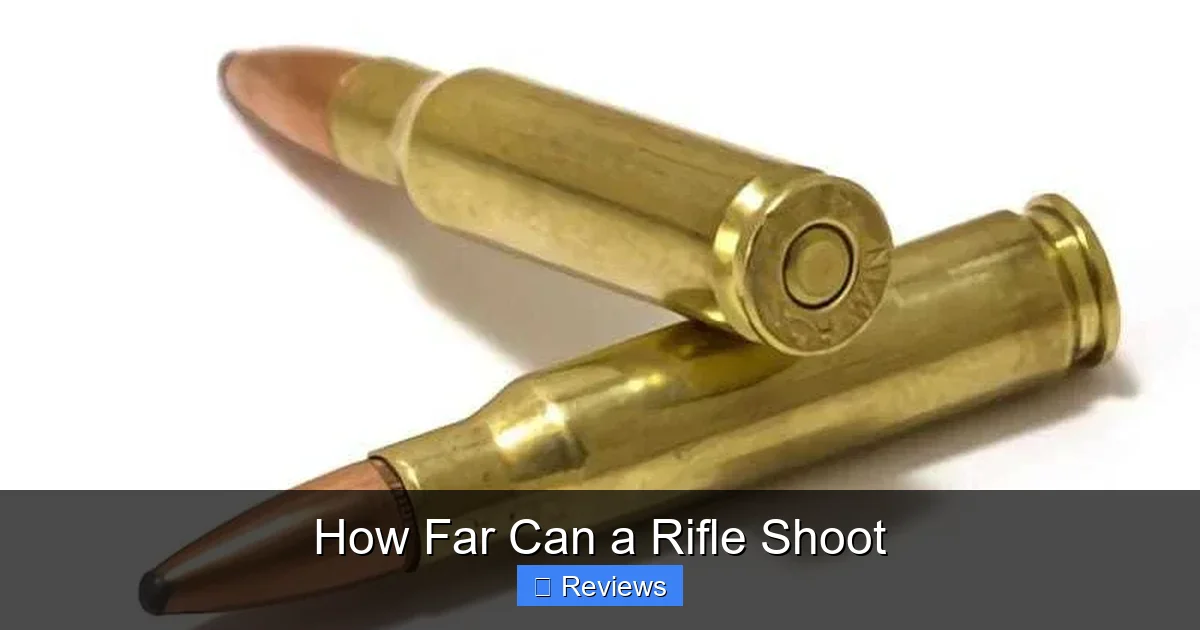
Maximum range refers to the absolute farthest distance a bullet can travel from the rifle. This is often when fired at an optimal angle (usually around 30-35 degrees above horizontal). The bullet will travel until gravity pulls it to the ground, or it loses all forward energy. For common hunting calibers, this can be several miles. For example, a .22LR bullet can travel up to 1.5 miles. A .30-06 Springfield can travel over 3 miles. A .50 BMG can travel over 5 miles!
This maximum range is mainly a safety consideration. You need to know how far your bullet could potentially go. You must always ensure you have a safe backstop that can stop the bullet before firing. It doesn’t mean you can hit anything at that distance.
What is Effective Range?
Effective range is the practical distance at which a shooter can consistently and accurately hit a target. This is the distance where the bullet still has enough energy to do its job (e.g., humanely harvest game or consistently hit a target for sport). It also depends on the shooter’s ability to place that shot accurately under real-world conditions.
For hunting, effective range is often defined by the shooter’s ability to consistently hit a vital zone on an animal. This is usually a 6-8 inch circle. For target shooting, it means hitting a specific scoring ring on a paper target. The effective range is always much, much less than the maximum range.
Real-World Implications
Think about a hunter. They might know their .308 rifle’s bullet could travel over 2 miles. But their effective hunting range might be 300-400 yards. This is because beyond that distance, the chances of making a clean, ethical shot diminish. For a competitive long-range shooter, their effective range might be 1,000 yards or more. This is due to specialized equipment, extensive training, and often ideal shooting conditions.
So, when you consider how far a rifle can shoot, always focus on the effective range. This is the practical limit for your skills and equipment.
Common Calibers and Their Typical Ranges
Different rifle calibers are designed with different purposes and distances in mind. Let’s look at some popular examples to illustrate how far a rifle can shoot depending on its ammunition.
Short-Range Calibers (Typically 0-200 yards effective)
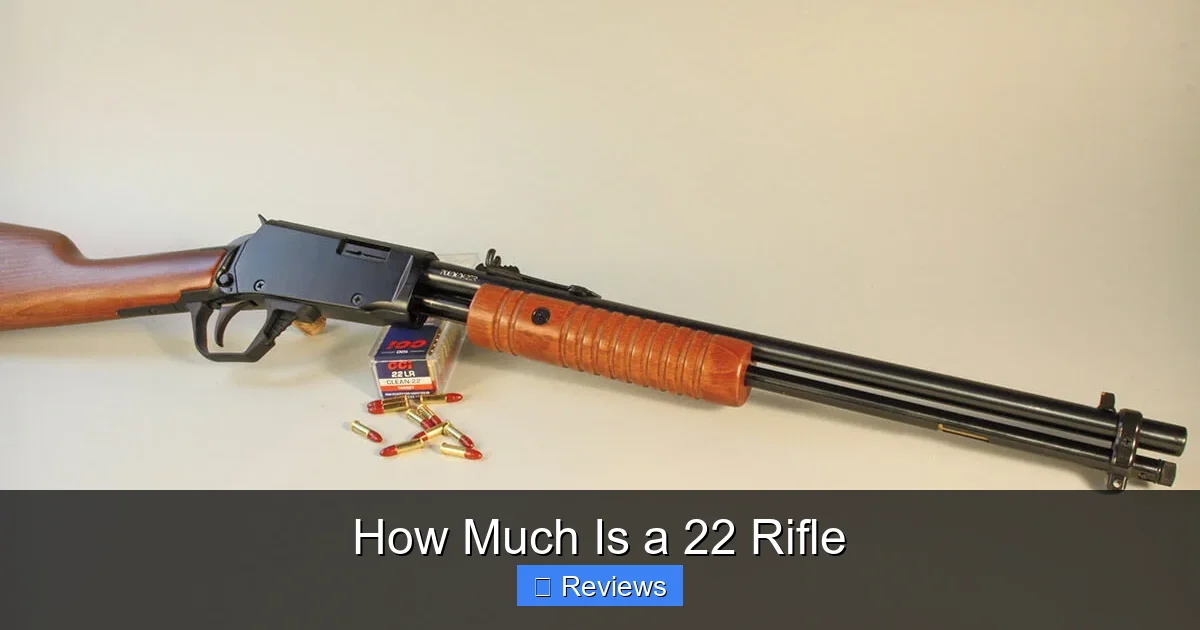
- .22 Long Rifle (.22LR): This is arguably the most popular caliber in the world. It’s excellent for plinking, small game hunting, and training. While its maximum range is up to 1.5 miles, its effective range for accuracy is usually 50-150 yards. Beyond that, the bullet drops significantly and is easily affected by wind.
- .30-30 Winchester: A classic lever-action cartridge. Great for brush hunting at closer ranges. Effective for deer-sized game up to about 150-200 yards. The flat-nosed bullet design limits its longer-range performance.
Medium-Range Calibers (Typically 200-500 yards effective)
- .223 Remington / 5.56x45mm NATO: Very popular in AR-style rifles. Good for varmint hunting and target shooting. Effective on small to medium game out to about 300-400 yards. Competitive shooters can push this further on paper targets.
- .243 Winchester: A versatile round. Good for varmints and medium game like deer. It’s known for its flat trajectory. Effective out to 300-400 yards for hunting, and further for target shooting.
- .30-06 Springfield: A venerable hunting cartridge. It’s very powerful and suitable for nearly all North American game. Effective range for hunting is typically 300-400 yards, sometimes 500 yards with practice.
Long-Range Calibers (Typically 500-1000 yards effective)
- .308 Winchester: A military and sporting classic. It’s incredibly versatile and accurate. A favorite for tactical applications, hunting, and long-range precision shooting. Many shooters can consistently hit targets at 600-800 yards with a good .308 rifle and practice. Some push it to 1000 yards.
- 6.5 Creedmoor: This relative newcomer has taken the shooting world by storm. It’s specifically designed for long-range precision. It has excellent ballistic properties and less recoil than some larger calibers. Many shooters find it easier to hit targets consistently at 800-1000 yards with the 6.5 Creedmoor.
- .300 Winchester Magnum: A powerful magnum cartridge. It offers flatter trajectories and more energy than the .308 Win. It’s often used for hunting large game at extended ranges (400-600 yards) and for long-range target shooting (800-1000+ yards).
Extreme Long-Range Calibers (Typically 1000+ yards effective)
- .338 Lapua Magnum: A specialized military and civilian round. It’s designed for extreme long-range engagement. It can maintain accuracy and energy past 1,500 yards, and even out to 2,000 yards in skilled hands. This is where you really start to see how far a rifle can shoot with specialized cartridges.
- .50 BMG (Browning Machine Gun): This is a massive cartridge. It’s used in heavy machine guns and specialized anti-materiel rifles. It has an incredible effective range, often exceeding 2,000 yards. It’s capable of hitting targets at over 2 miles in extreme cases.
Remember, these are typical ranges. A highly skilled shooter with a customized rifle and hand-loaded ammunition can often exceed these figures. But for most of us, these provide a good baseline for how far a rifle can shoot effectively.
The Role of Optics and Accessories
You can’t talk about how far a rifle can shoot without mentioning the tools that help you do it. Modern technology greatly extends a rifle’s practical range.
Scopes (Rifle Scopes)
A good scope is indispensable for accurate long-range shooting. It magnifies your target, allowing you to see it clearly at distances where it would otherwise be a tiny speck. Key features include:
- Magnification: Higher magnification helps you see smaller targets farther away. Variable power scopes (e.g., 5-25x) are very popular.
- Reticle: This is the aiming point inside your scope. Many modern scopes have reticles with built-in hash marks (like Mil-Dot or Christmas tree reticles). These help you estimate bullet drop and wind drift.
- Turrets: These are the knobs on your scope that allow you to adjust for elevation (bullet drop) and windage (wind drift). Precise, repeatable turrets are critical for long-range accuracy.
Rangefinders
Knowing the exact distance to your target is non-negotiable for long-range shooting. A laser rangefinder gives you an accurate reading, which is vital for calculating bullet drop. Even a 10-yard error in distance can result in a significant miss at 500 yards.
Bipods and Tripods
Stability is king. A bipod attached to your rifle’s forend, or a sturdy shooting tripod, provides a stable platform. This eliminates human shakiness and allows for precise aiming. It makes a huge difference in how far a rifle can shoot accurately.
Ballistic Calculators
These are apps or devices that use complex formulas to predict bullet trajectory. You input data like your bullet’s ballistic coefficient, muzzle velocity, target distance, wind speed, temperature, and altitude. The calculator then tells you exactly how many clicks of elevation and windage to dial into your scope. This technology has revolutionized long-range shooting. It helps to accurately determine how far a rifle can shoot under specific conditions.
Mastering Long-Range Shooting: Tips for Extending Your Reach
So, you want to push the limits of how far a rifle can shoot? Here are some practical tips to help you get there.
Practice Fundamentals Religiously
Never forget the basics. A solid shooting position, consistent trigger pull, and proper breath control are the foundation. These skills must be ingrained. Practice them even at closer ranges. They are what allow you to consistently hit targets far away.
Understand Your Rifle and Ammo
Get to know your specific rifle and the ammunition it prefers. Every rifle is a little different. Test various bullet types and brands. Find out which combination shoots the most accurately from your gun. Keep detailed records of your groupings and velocities.
Read the Wind
Wind is your arch-enemy at long range. Learn to observe wind flags, mirage (heat waves rising from the ground), and vegetation. Practice estimating wind speed and direction. This takes a lot of time and observation. It’s a key skill for knowing how far a rifle can shoot with precision.
Learn to Adjust for Elevation and Windage
You need to be able to dial your scope’s turrets accurately and confidently. Understand what a “click” means for your specific scope (e.g., 1/4 MOA or 0.1 MIL). Practice making adjustments based on your ballistic data. Don’t be afraid to shoot, spot your miss, and then correct.
Consistent Dope (Data On Previous Engagements)
Keep a detailed logbook. Record your rifle, ammunition, environmental conditions, distance, and the actual adjustments you made to hit the target. This “dope” is invaluable. It helps you build a personal ballistic profile for your rifle and ammo. This data is critical for knowing how far a rifle can shoot under various conditions.
Spotting and Communication
If possible, shoot with a spotter. A good spotter watches where your bullet impacts (or misses). They can provide crucial feedback on wind calls and needed adjustments. Effective communication between shooter and spotter is a huge advantage for long-range accuracy.
Pushing the limits of how far a rifle can shoot is a journey. It requires dedication, learning, and a passion for precision. Remember to always prioritize safety and respect the capabilities of your firearm.
Conclusion
So, how far can a rifle shoot? As we’ve seen, it’s far more nuanced than a simple number. It’s a complex interplay of the rifle’s design, the ammunition’s performance, the shooter’s skill, and the surrounding environment. While a bullet might travel for miles, the effective range—where you can consistently hit your target—is always a more practical and important consideration.
Modern rifles and advanced optics allow incredibly precise shots at ever-increasing distances. But these tools are only as good as the person using them. Mastery of fundamentals, a deep understanding of ballistics, and constant practice are what truly extend your personal effective range. Remember, safety is always paramount. Always know your bullet’s maximum travel distance and ensure a safe firing zone.
Whether you’re aiming for precision on the competition range or an ethical shot in the field, knowing these factors empowers you. It allows you to make informed decisions and enjoy the incredible capabilities of your rifle responsibly. The journey to becoming a better long-range shooter is challenging but incredibly rewarding. Keep learning, keep practicing, and enjoy pushing your limits to see just how far your rifle can shoot.
🎥 Related Video: I Tried🤣🧨 50 BMG
📺 Yoki Sturrup
Frequently Asked Questions
How does wind affect a rifle’s shooting distance?
Wind is one of the most significant factors affecting a bullet’s trajectory at longer distances. Even a light breeze can push a bullet several feet off target over hundreds of yards, requiring the shooter to make precise windage adjustments to maintain accuracy.
What is the difference between MOA and MIL in rifle scopes?
MOA (Minute of Angle) and MIL (Milliradian) are two different angular measurement systems used in rifle scopes to make adjustments for bullet drop and wind drift. Both are effective, but they represent different units, so it’s important to use one system consistently throughout your equipment and calculations.
Why is trigger control so important for long-range shooting?
Trigger control is crucial because any sudden jerk or movement of the rifle during the shot can cause the bullet to go off target. At long distances, even a tiny movement translates to a significant miss, so a smooth, consistent trigger pull is essential for accuracy.
Do heavier bullets always shoot farther than lighter ones?
Not necessarily “farther” in terms of maximum range, but heavier bullets often perform better at *effective* long ranges. This is because they tend to have a higher ballistic coefficient, making them more stable in flight and less susceptible to wind drift, thus retaining energy and accuracy over distance.
How does altitude impact a rifle’s shooting distance?
At higher altitudes, the air is thinner and less dense. This means there is less air resistance (drag) on the bullet. Consequently, bullets will typically fly slightly flatter, retain more velocity, and have a greater effective range at higher elevations compared to sea level.
Is it necessary to use a ballistic calculator for long-range shooting?
While not strictly “necessary” for very short ranges, a ballistic calculator becomes highly advantageous, if not essential, for accurate long-range shooting. It quickly computes precise bullet drop and windage adjustments, accounting for multiple environmental factors, which saves a tremendous amount of time and ammunition compared to trial and error.