A .22 rifle is incredibly versatile, but understanding its true range is key. While a .22LR bullet can travel over a mile, its effective accurate range for practical purposes, like hunting or target shooting, is typically between 50 to 150 yards, depending heavily on ammunition, rifle quality, and shooter skill. Safety is paramount, as the bullet remains dangerous far beyond its accurate range.
Ah, the trusty .22 rifle. It’s often the first firearm many of us ever shoot, a backyard plinking legend, and a go-to for small game hunting. It’s affordable, has minimal recoil, and the ammunition is usually easy to find. But there’s one question that always pops up when you talk about this versatile little cartridge: “How far can a 22 rifle shoot?”
It’s a fantastic question, and one that doesn’t have a simple, single answer. The truth is, the answer depends on what you mean by “how far.” Are we talking about the maximum distance the bullet can physically travel before it runs out of steam? Or are we talking about the effective range – the distance at which you can consistently hit what you’re aiming at and achieve your desired outcome, whether that’s dropping a squirrel or hitting a bullseye? Let’s dive deep into understanding the capabilities and limitations of your favorite rimfire friend.
Understanding how far a 22 rifle can shoot is not just about bragging rights; it’s about safety, ethical hunting, and maximizing your enjoyment at the range. So, grab a cup of coffee, and let’s unravel the mysteries of the .22LR’s surprising reach and practical limitations.
Key Takeaways
- Maximum Dangerous Range: A .22LR bullet can travel over 1.5 miles (2,000 yards), posing a significant safety risk far beyond its effective range.
- Effective Accurate Range: For most shooters, the practical accurate range for a .22 rifle is 50-100 yards, extending to 150-200 yards with practice, quality gear, and specific ammunition.
- Factors Influence Range: Ammunition type (standard, high-velocity, match-grade), rifle quality (barrel length, rifling), shooter skill, optics, and environmental conditions all play a crucial role in how far a 22 rifle can shoot accurately.
- Bullet Drop is Significant: The .22LR experiences substantial bullet drop, especially past 50 yards, requiring holdover or sight adjustments for accurate shots.
- Ammunition Matters Greatly: Investing in quality, consistent ammunition tailored to your rifle is one of the biggest improvements you can make to extend your effective range.
- Safety First Always: Always be aware of your backstop and beyond your target. The small .22LR can ricochet easily and is capable of causing serious harm at surprisingly long distances.
Quick Answers to Common Questions
What is the maximum effective hunting range for a .22LR?
The maximum effective hunting range for a .22LR on small game like squirrels or rabbits is generally considered to be 75-100 yards, ensuring a humane kill with adequate bullet energy.
Can a .22LR bullet kill a person?
Yes, absolutely. Despite its small size, a .22LR bullet can be lethal and cause serious injury or death. It should always be treated with the same respect and safety precautions as any other firearm.
Does bullet type affect how far a 22 rifle can shoot?
Yes, bullet type significantly affects how far a 22 rifle can shoot. Different bullet weights, velocities (subsonic, standard, high-velocity), and profiles (round nose, hollow point) will impact trajectory, energy retention, and overall accuracy at various distances.
Is a longer barrel better for shooting a .22 rifle farther?
Generally, yes. A longer barrel typically allows for a more complete powder burn, which can lead to higher muzzle velocities and slightly better accuracy, especially beneficial when trying to shoot a .22 rifle farther.
What is the biggest challenge when trying to shoot a .22 rifle accurately past 100 yards?
The biggest challenge when trying to shoot a .22 rifle accurately past 100 yards is bullet drop. The small, lightweight .22LR bullet experiences significant gravitational pull, requiring precise elevation adjustments or holdovers to hit the target.
📑 Table of Contents
The Basics: Understanding the .22LR Cartridge
Before we can talk about how far a 22 rifle can shoot, we need to understand the cartridge itself. The .22 Long Rifle, or .22LR, is a rimfire cartridge, meaning the firing pin strikes the rim of the casing to ignite the primer. It’s one of the oldest and most popular cartridges in the world, renowned for its low cost and versatility.
Cartridge Types and Their Impact
While we often just say “.22,” there are actually several types of .22 rimfire cartridges. The most common is the .22 Long Rifle, but you might also encounter .22 Short, .22 Long, and the more powerful .22 Winchester Magnum Rimfire (WMR), also known as .22 Mag. For this discussion, we’re primarily focusing on the standard .22LR, which is what most people refer to when they ask, “how far can a 22 rifle shoot?”
- .22 Short: Designed for quiet shooting and often used in gallery guns. Very limited range.
- .22 Long: An older cartridge, not as common today. Longer case than the Short, but same bullet.
- .22 Long Rifle (LR): The king of rimfire. Most popular, widest range of ammunition types. This is our focus.
- .22 WMR (Magnum): A significantly more powerful cartridge with higher velocities and flatter trajectories, extending its effective range considerably beyond the .22LR. It requires a different rifle chambered specifically for it.
Bullet Weight and Velocity
Most .22LR bullets weigh between 30 and 40 grains. The standard bullet weight is usually 40 grains. Bullet velocity can vary greatly depending on the load:
- Subsonic: Typically around 1050 feet per second (fps). Quieter, often used with suppressors.
- Standard Velocity: Around 1120-1150 fps. A common, well-balanced load.
- High Velocity: Ranges from 1200-1300 fps. Offers a bit more punch and a slightly flatter trajectory initially.
- Hyper Velocity: Can exceed 1400 fps, often with lighter bullets (around 30-32 grains). These can offer flatter trajectories but sometimes sacrifice accuracy.
The faster and heavier the bullet, generally, the more energy it retains downrange and the flatter its trajectory will be for a certain distance. This directly impacts how far a 22 rifle can shoot effectively.
What “Effective Range” Really Means
This is crucial. The “maximum range” of a .22LR bullet – how far it can travel and still be dangerous – is surprisingly far. A .22LR bullet, when fired at an optimal angle, can travel over 1.5 miles, or approximately 2,000 yards! This means a bullet fired into the air could potentially come down with enough force to injure someone a long distance away. Always know what’s beyond your target!
However, “effective range” is different. It refers to the distance at which a shooter can consistently hit a target with sufficient accuracy and energy to achieve their goal. For small game hunting, this means enough energy to humanely dispatch the animal. For target shooting, it means hitting your mark with acceptable precision. This is the practical answer to “how far can a 22 rifle shoot” for most people.
Factors Influencing a .22 Rifle’s Range and Accuracy
The .22LR is a humble cartridge, but many variables combine to determine its true performance. Understanding these factors will help you push the limits of how far a 22 rifle can shoot accurately.
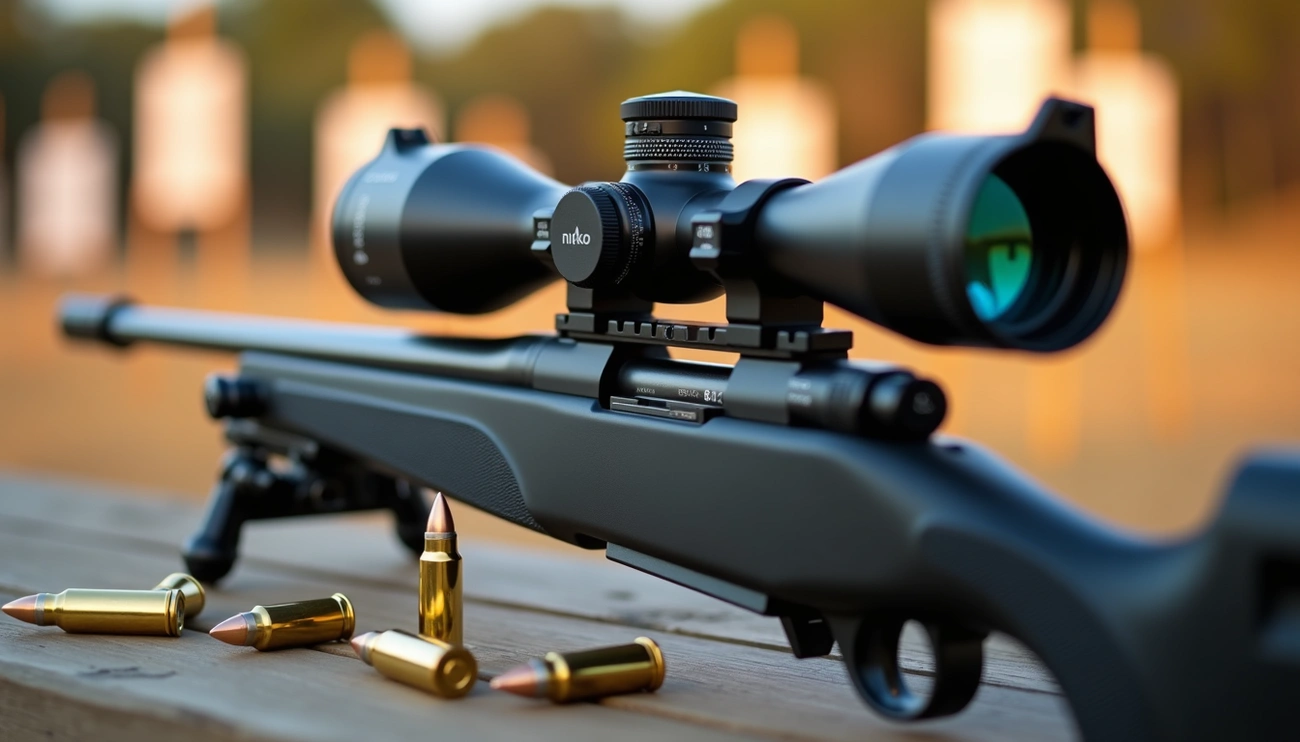
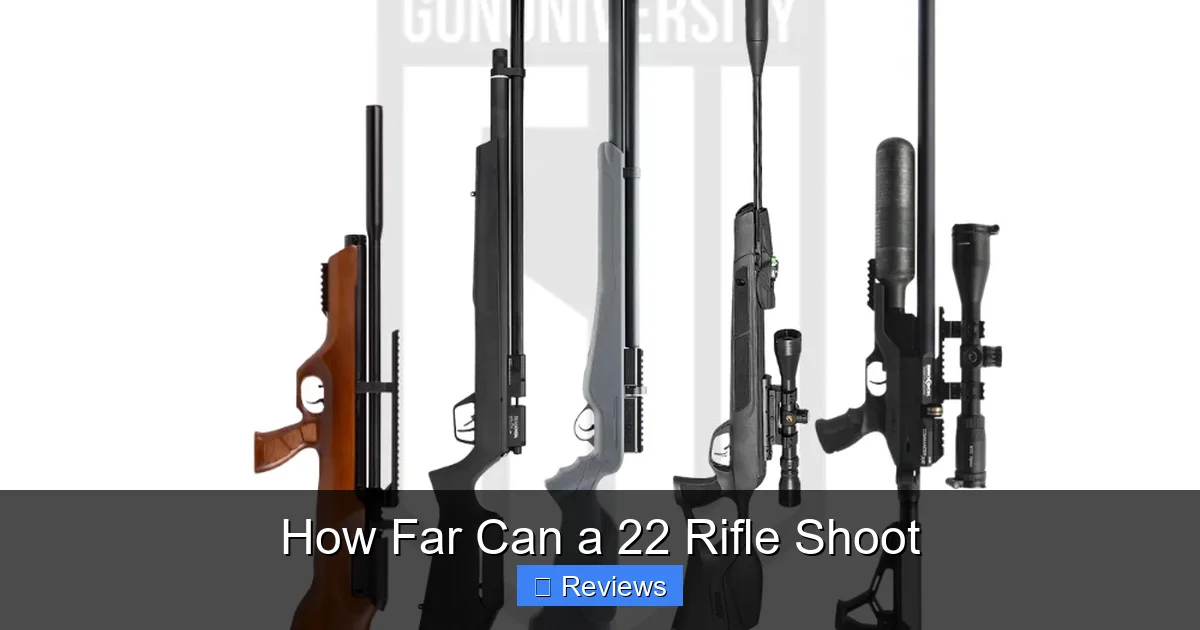
Visual guide about How Far Can a 22 Rifle Shoot
Image source: gununiversity.com
Ammunition Type
We touched on this, but it’s worth emphasizing. Different types of .22LR ammunition will perform wildly differently.
- Match Grade Ammo: This is specially made for consistency and accuracy, often with tighter tolerances and higher quality components. It usually shines at longer ranges.
- Bulk Pack Ammo: Great for plinking, but consistency can vary widely, leading to flyers and reduced accuracy, especially past 50 yards.
- Bullet Profile: Round nose, hollow point, and truncated cone bullets can all behave slightly differently in flight.
Your rifle will often “prefer” a certain brand and type of ammunition. Experimentation is key!
Rifle Type and Quality
The rifle itself plays a huge role.
- Barrel Length: Longer barrels generally allow more complete powder burn, leading to higher velocities and better accuracy. A 16-inch barrel is common, but some target rifles have 20-24 inch barrels.
- Barrel Quality and Rifling: A high-quality barrel with consistent rifling (the spiral grooves that make the bullet spin) will deliver much better accuracy.
- Action Type: Bolt-action rifles are typically more accurate than semi-automatics because they have fewer moving parts that can affect barrel harmonics or introduce vibration.
- Stock and Bedding: A stable stock and proper bedding (how the action fits into the stock) reduce movement and improve consistency.
Shooter Skill and Experience
This might be the most critical factor! Even with the best rifle and ammo, a shaky hand or poor fundamentals will lead to missed shots.
- Fundamentals: Breathing control, trigger discipline, sight picture, and follow-through are paramount.
- Position: A stable shooting position (prone, bench rest) significantly improves accuracy compared to offhand shooting.
- Practice: Consistent practice refines your technique and helps you understand how far a 22 rifle can shoot for *you*.
Optics and Sights
You can’t hit what you can’t see!
- Iron Sights: Excellent for close range and basic training, but limit precision at longer distances.
- Red Dot Sights: Fast target acquisition, but the dot size can obscure small targets at range.
- Telescopic Scopes: Magnification is your friend for precision. A good quality scope with clear glass and repeatable adjustments is essential for shooting accurately past 50 yards. Parallax adjustment is also a big plus for rimfire scopes.
Environmental Conditions
Mother Nature loves to mess with bullet trajectories.
- Wind: Even a light breeze can push a lightweight .22 bullet off course. Reading the wind is a skill in itself.
- Temperature and Altitude: These affect air density, which in turn affects bullet drag. Higher altitude and temperature generally mean less drag and slightly flatter trajectories.
- Humidity: Also a minor factor in air density.
These elements are minor for short ranges but become very noticeable when you’re trying to understand how far a 22 rifle can shoot out to 100 or 200 yards.
Practical Shooting Distances for a .22 Rifle
Let’s break down the practical expectations for how far a 22 rifle can shoot at different distances.
Up to 50 Yards: Plinking and Small Game
This is the bread and butter of the .22LR. At 25-50 yards, a decent rifle with standard velocity ammunition is remarkably accurate. Bullet drop is minimal, and recoil is non-existent. This is ideal for:
- Backyard Plinking: Tin cans, reactive targets, having fun.
- Target Practice: Learning fundamentals, zeroing your rifle.
- Small Game Hunting: Squirrels, rabbits, and other small critters are ethically taken at these ranges.
Most beginners can achieve good groups at 25-50 yards relatively quickly. For many, this is the sweet spot of how far a 22 rifle can shoot effectively for casual use.
50-100 Yards: Target Practice and Pest Control
Moving out to 50-100 yards is where the .22LR starts to show its limitations and where skill and equipment become more critical.
- Bullet Drop: At 100 yards, a .22LR bullet zeroed at 50 yards can drop anywhere from 6 to 10 inches, depending on the load. You’ll need to know your bullet’s trajectory or use holdover.
- Wind Drift: Wind becomes a noticeable factor.
- Accuracy Requirements: Target size often shrinks for acceptable hits.
With a good rifle, quality ammunition, and a skilled shooter using a scope, consistent hits on a 1-2 inch target at 100 yards are achievable. This range is also suitable for pest control (like groundhogs or prairie dogs) if you’re precise. This is typically the maximum ethical hunting range for the .22LR on small game.
Beyond 100 Yards: Challenging Long-Range Shots
Can a .22 rifle shoot accurately beyond 100 yards? Absolutely, but it becomes a specialized discipline.
- 150-200 Yards: With match-grade ammunition, a precision rifle, a high-magnification scope, and an experienced shooter, hitting targets consistently is possible. Bullet drop will be significant (15-30+ inches at 150 yards, 30-50+ inches at 200 yards), requiring precise elevation adjustments or holdovers.
- 200+ Yards: This is considered “long-range” for a .22LR. It’s more about testing skill and equipment than practical application. The bullet will be well into the subsonic range, making it highly susceptible to wind and gravity. Targets are usually large steel plates.
When you’re asking how far a 22 rifle can shoot at these distances, you’re entering the realm of dedicated rimfire precision shooting, which is a fantastic challenge and very rewarding!
The “Dangerous” Range vs. “Effective” Range
It’s vital to remember the difference. While the effective range for precise shooting or ethical hunting is typically under 150-200 yards, the maximum *dangerous* range, where a bullet can still cause serious injury or death, extends far beyond that. As mentioned, over 1.5 miles. This is why proper backstops and knowing your firing line are critical every single time you pull the trigger on a .22 rifle.
Achieving Accuracy: Tips for Extending Your .22’s Performance
Want to push the limits of how far a 22 rifle can shoot for you? Here are some practical tips to improve your accuracy and extend your effective range.
Ammunition Selection is Key
This is often the single biggest factor you can control.
- Find Your Rifle’s Favorite: Every rifle has a “preferred” ammunition. Buy several different brands and types (standard velocity, high velocity, match grade) and test them from a stable shooting position. Shoot groups at 50 yards and see what performs best.
- Consistency: Once you find what works, stick with it. Bulk pack ammunition is fun, but its consistency will often limit your long-range accuracy.
- Lot Numbers: Even within the same brand and type, ammunition from different production lots can vary. If you find a particularly accurate lot, buy in quantity.
Rifle Maintenance and Setup
A clean, well-maintained rifle performs better.
- Clean Barrel: While .22LR barrels don’t need cleaning as often as centerfire, a fouled barrel can lose accuracy. Clean it when groups start to open up.
- Tight Screws: Check scope mounts, action screws, and stock screws regularly. Loose components cause inconsistent accuracy.
- Trigger Upgrade: A lighter, crisper trigger pull can dramatically improve your ability to shoot accurately. Many aftermarket triggers are available for popular .22 rifles.
Mastering Marksmanship Fundamentals
No amount of gear can replace good technique.
- Stable Position: Shoot from a bench rest with sandbags, a bipod, or a prone position whenever possible for maximum stability.
- Breathing Control: Shoot during the natural respiratory pause.
- Trigger Control: Squeeze the trigger straight back without disturbing the sight picture. Avoid jerking or slapping the trigger.
- Follow Through: Maintain your sight picture even after the shot breaks until the bullet has left the barrel.
Choosing the Right Optics
A good scope will help you see your target and aim precisely.
- Magnification: For 100 yards and beyond, a variable power scope with at least 9x or 12x top-end magnification is beneficial.
- Adjustable Objective (AO) or Side Parallax: This feature allows you to eliminate parallax error, which is critical for precision shooting at varying distances with a .22 rifle.
- Clear Glass: Invest in the best glass you can afford for a clear, crisp image.
- Reliable Turrets: If you plan to dial for elevation, your scope’s turrets need to track accurately and return to zero consistently.
Ballistics Calculators and Drop Charts
These tools are invaluable for understanding how far a 22 rifle can shoot and how gravity affects your bullet.
- Shoot and Document: Zero your rifle at 50 yards. Then, shoot at 75, 100, 150, and 200 yards, noting exactly how much drop you observe or how many clicks of elevation you need to hit the bullseye.
- Use a Ballistics App: Many free and paid apps can help you create custom drop charts based on your specific ammunition, muzzle velocity, and environmental conditions. This takes the guesswork out of holdovers.
Safety First: Understanding the .22’s True Potential
No discussion about how far a 22 rifle can shoot would be complete without emphasizing safety. The .22LR is often underestimated because of its low recoil and “plinking” reputation. However, it is a lethal cartridge capable of causing serious harm or death.
Ricochet Risks
One of the biggest dangers with the .22LR is its tendency to ricochet. Its small, relatively soft lead bullet can easily glance off hard surfaces like rocks, frozen ground, metal targets, or even water at shallow angles. A ricocheting bullet can change direction unpredictably and retain enough energy to be very dangerous.
Backstop Importance
Always, always ensure you have a safe and adequate backstop that will stop and contain your bullets. Dirt berms, sand, or specialty bullet traps are ideal. Never shoot at flat, hard surfaces, and be mindful of what is behind and beyond your target area, even if it seems far away. Remember that 1.5-mile maximum dangerous range!
Knowing Your Target and Beyond
Before you ever press that trigger, confirm your target and what lies beyond it. This isn’t just a guideline for powerful centerfire rifles; it’s a fundamental rule for all firearms, including the humble .22. Just because you’re shooting at relatively short ranges doesn’t mean your bullet won’t travel further if you miss or overpenetrate.
Conclusion
So, how far can a 22 rifle shoot? The answer is nuanced, ranging from 50 yards for reliable plinking and ethical hunting, up to 150-200 yards for skilled shooters with proper equipment, and even further for dedicated long-range enthusiasts pushing the cartridge’s limits. The .22LR bullet itself can travel an astonishing distance, making safety considerations paramount at all times.
The beauty of the .22 rifle lies in its versatility and the endless opportunities it provides for practice, skill development, and pure shooting enjoyment. By understanding the factors that influence its performance, choosing the right ammunition, honing your skills, and always prioritizing safety, you can truly unlock the full potential of your .22 rifle and confidently extend its effective range.
Whether you’re introducing a new shooter to the sport, honing your own marksmanship, or putting meat on the table, the .22LR remains an indispensable tool. Get out there, practice safely, and enjoy the journey of discovering just how far your 22 rifle can shoot!
🎥 Related Video: NEVER Do This with a 22 Long Rifle
📺 Ron Spomer Outdoors
NEVER Do This with a 22 Long Rifle Subscribe to my channel: http://bit.ly/RonSpomerOutdoorsSubscribe Affiliate Links: Links: …
Frequently Asked Questions
How far can a 22 rifle shoot before the bullet becomes inaccurate?
For most shooters and standard ammunition, a 22 rifle starts to become noticeably less accurate past 50-75 yards. Beyond 100 yards, bullet drop and wind drift make consistent hits much more challenging without specific training and equipment.
Is a .22LR good for self-defense?
While a .22LR can be lethal, it is generally not recommended as a primary self-defense caliber due to its lower power and potential for reduced stopping power compared to larger calibers. However, any firearm is better than no firearm in a defensive situation.
How much does a .22LR bullet drop at 100 yards?
A .22LR bullet, zeroed at 50 yards, can drop anywhere from 6 to 10 inches at 100 yards, depending on the specific ammunition type and muzzle velocity. This significant drop requires compensation for accurate shooting.
What kind of scope is best for shooting a .22 rifle at 100 yards?
For shooting a .22 rifle at 100 yards, a variable power scope with at least 9x to 12x magnification on the top end is recommended. A scope with an adjustable objective (AO) or side parallax adjustment is also highly beneficial for precise focusing at varying rimfire distances.
Can a .22 rifle shoot through a tree?
A .22LR bullet can potentially penetrate thin branches or soft saplings, but it’s unlikely to fully penetrate a mature tree trunk. The bullet often deforms or breaks apart upon hitting dense wood, but this can create dangerous ricochets.
What’s the difference between .22LR and .22 Magnum regarding range?
The .22 Winchester Magnum Rimfire (.22 WMR or .22 Magnum) is a significantly more powerful cartridge than the .22LR. It typically offers higher velocities, a flatter trajectory, and retains more energy downrange, extending its effective accurate range considerably, often out to 125-150 yards for hunting and even further for target shooting.