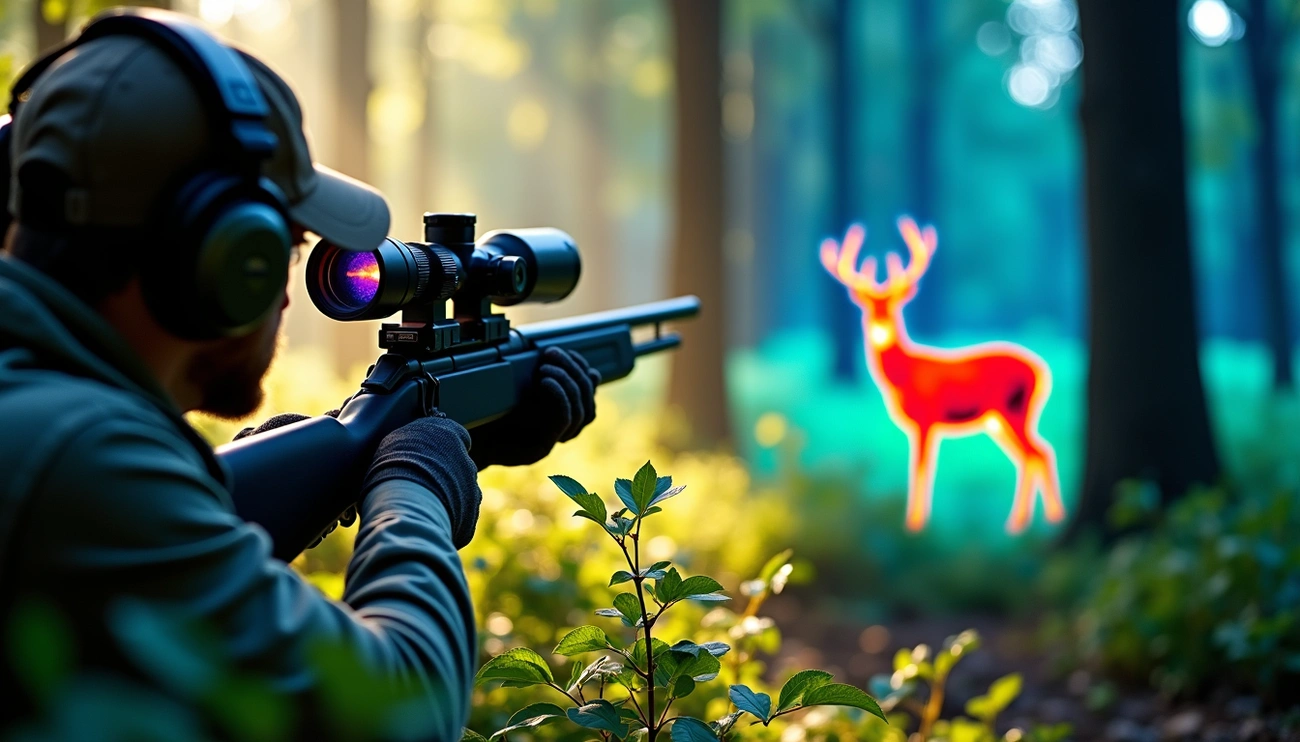
Yes, thermal imaging works during the day because it detects heat (infrared radiation), not visible light. Thermal cameras operate independently of daylight and remain highly effective in daytime conditions. They excel at spotting, tracking, and identifying animals or humans, even in thick brush or when targets are camouflaged.
How Thermal Imaging Works in Daylight
To understand thermal imaging fundamentally, we need to look at how it differs from conventional optics. While traditional scopes create images based on reflected light, thermal devices operate on an entirely different principle.
Thermal vs. visible light detection
Thermal imaging technology detects infrared radiation—heat energy emitted by all objects above absolute zero. This detection works in a completely different spectrum than regular cameras. Traditional optics and the human eye both capture visible light that bounces off objects, whereas thermal sensors detect the heat naturally emitted from objects and convert it into visible images.
The technology operates in the infrared spectrum, specifically in long-wave infrared bands typically from 8 to 14 micrometers in wavelength. This fundamental difference enables thermal scopes to function regardless of lighting conditions, creating clear images based solely on temperature variations.
Why heat contrast matters more than light
For thermal imaging, contrast between objects comes from temperature differences, not color or brightness. Modern thermal devices can detect temperature differences as small as 0.01°C and translate these subtle variations into visible images. This sensitivity allows hunters and professionals to spot targets that would otherwise blend perfectly with their surroundings.
The primary factor affecting image quality isn’t light but the temperature differential between your target and its environment. Even when an animal is perfectly camouflaged visually, its body heat creates a distinct signature against cooler backgrounds. Additionally, thermal scopes use microbolometer sensors that function identically throughout the 24-hour cycle.
Can you use a thermal scope during the day?
Absolutely—thermal scopes work excellently during daylight hours. Since they detect heat rather than light, they operate effectively regardless of ambient light conditions. The scope detects infrared radiation from objects in its view, functioning independently of visible light.
Many hunters mistakenly associate thermal optics with nighttime use only. Nevertheless, these devices maintain their detection capabilities throughout the day, offering significant advantages even in bright sunlight. For instance, thermal scopes excel at spotting animals hidden in dense vegetation or brush during daylight, as the animal’s body heat stands out clearly against cooler surroundings.
The only major difference is that sunlight warms surfaces, creating some background thermal noise in the image. Still, this doesn’t render thermal scopes ineffective—it simply means understanding how to optimize their performance for daytime conditions.
Real-World Uses of Thermal Optics During the Day
Thermal imaging isn’t just theoretical technology—it excels in numerous practical applications throughout daylight hours. Let’s explore how these devices prove their worth when the sun is shining.
Hunting in dense vegetation
Thermal optics offer hunters a significant edge in daylight conditions, especially in thick brush. One outstanding benefit is the ability to see through dense vegetation that would normally conceal game animals. The heat signatures of wildlife become instantly visible against cooler backgrounds, even when perfectly camouflaged to the naked eye. Moreover, thermal imaging helps track wounded game by revealing warm blood trails, making recovery efforts far more efficient. For mountain hunters facing variable conditions, carrying a thermal monocular provides insurance against sudden fog or limited visibility.
Search and rescue operations
Search and rescue teams rely heavily on thermal technology regardless of time of day. These devices detect body heat through challenging environments, allowing rescue personnel to locate missing persons with remarkable efficiency. Thermal-equipped drones have transformed search operations, achieving an impressive 90% accurate classification rate when identifying humans below forest canopies. Furthermore, this technology functions effectively regardless of environmental conditions—even when individuals are unconscious, immobile, or concealed behind vegetation.
Daytime security and surveillance
Security professionals embrace thermal imaging for its exceptional detection capabilities in daylight. These systems excel at identifying potential threats that remain invisible to conventional cameras. Thermal cameras operate independently of visible light conditions, making them ideal for monitoring perimeters and high-value assets. They detect heat signatures from individuals or vehicles, functioning effectively through challenging conditions like light fog or smoke.
Industrial inspections and maintenance
Industrial applications benefit tremendously from daytime thermal imaging. Maintenance teams utilize these devices to identify equipment requiring attention through heat pattern analysis. By detecting temperature anomalies in machinery, thermal cameras enable early identification of potential failures before they cause costly downtime. This preventative approach substantially reduces maintenance expenses while improving overall operational safety.
Challenges of Using Thermal Scopes in Daylight
Although thermal scopes perform effectively in daylight, they face distinct challenges compared to nighttime operation. Understanding these limitations helps hunters maximize their daytime thermal experience.
Reduced contrast due to sun-heated surfaces
The sun creates a challenging thermal environment by heating surfaces unevenly throughout the day. Rocks, vehicles, buildings, and vegetation absorb solar radiation, creating background heat that makes it difficult to distinguish targets from surroundings. This solar heating significantly reduces the temperature differential between animals and their environment.
According to research, detection range typically decreases 15-25% during peak daytime temperatures compared to early morning or evening operations. This effect becomes most pronounced when ambient temperatures approach the surface temperature of game animals (approximately 15-25°C). First thing to understand is that objects exposed to direct sunlight develop thermal signatures unrelated to their internal temperature, potentially creating false readings.
Thermal noise and image clarity issues
Daytime thermal imaging introduces noticeable clarity challenges. As ambient temperatures rise, thermal noise increases, fine target detail degrades, and subtle signatures may blur into background environments. Even high-quality sensors struggle with the thermal saturation that occurs on sun-exposed surfaces.
Another issue is thermal crossover—brief periods typically around sunrise and sunset when surrounding temperatures temporarily match certain objects, making them virtually invisible to thermal sensors. Plus, on extremely hot days, heat mirages can distort thermal images, creating wavy patterns that reduce clarity, particularly at distance.
Environmental factors like fog and humidity
Environmental conditions significantly impact thermal performance through several mechanisms. High humidity levels create substantial challenges as water vapor absorbs certain infrared wavelengths. European research shows extremely high humidity conditions (>90% relative humidity) can reduce effective thermal detection ranges by approximately 25-30% compared to identical temperature conditions with low humidity (<30%).
Fog and rain severely limit thermal imaging range due to scattering effects off water droplets. The higher the density of droplets, the more the infrared signal diminishes. Conversely, thermal imaging functions surprisingly well through smoke environments compared to fog.
Do thermal scopes work during the day in hot weather?
Thermal scopes absolutely function in hot weather, albeit with performance adjustments. The primary challenge comes from compressed temperature differentials—as environmental temperatures approach an animal’s body temperature, thermal contrast decreases. Red deer surface temperature typically maintains 5-8°C differential above ambient in moderate conditions, yet this differential can decrease to 2-3°C in extreme conditions, reducing detection contrast and effective identification range by approximately 35-40%.
Heat introduces atmospheric thermal turbulence (similar to visible mirages), potentially distorting images at extended ranges. Research notes detection range reductions of 20-30% in extreme heat conditions (>35°C) primarily due to these thermal turbulence effects. Correspondingly, hunters should adjust settings and expectations accordingly when operating in peak daytime heat.
Tips to Improve Daytime Thermal Imaging Performance
Mastering thermal imaging in daylight requires specific techniques to overcome the challenges of sun-heated environments. These practical adjustments will help you get optimal performance from your thermal optics throughout the day.
Adjusting contrast and brightness settings
Primarily, decreasing contrast (around 2-3/20) while maintaining mid-level brightness (8/20) dramatically improves daytime thermal imaging. This flattens the appearance of inanimate objects while making animals stand out clearly. During summer or near sunset when false targets multiply, lower contrast settings reduce thermal sensitivity, displaying the environment more uniformly. Likewise, increasing brightness slightly helps compensate for the sun’s heat signatures when identifying prey animals.
Using the right color palette
The right color palette can enhance your ability to spot targets in challenging daytime conditions. White Hot remains the most versatile palette, presenting warmer objects in white against black backgrounds—ideal for quick target acquisition. Black Hot displays warmer objects as black, making it easier to track in very hot environments where the ground emits significant infrared energy. Rainbow and other multi-color palettes excel at showing minute temperature variations, revealing subtle differences that monochrome palettes might miss.
Avoiding direct sunlight and finding shade
Operating from shaded areas substantially improves thermal imaging performance. Shade creates cooler backgrounds that help targets stand out more clearly. Furthermore, avoiding direct sunlight exposure to your thermal scope’s lens protects sensitive internal sensors from potential damage. The best daytime conditions occur after sunrise or during cloudy days when there are fewer false targets.
Battery management for extended use
For extended daytime sessions, strategic battery management becomes essential. Consider adjusting power-intensive settings such as screen brightness, Wi-Fi connectivity, and Bluetooth to conserve energy. Most thermal scopes offer power-saving modes that minimize consumption during periods of inactivity. Carrying spare 18650 batteries or a portable Type-C power bank ensures uninterrupted operation throughout extended hunts.
Practicing in different environments
Proficiency with thermal optics comes exclusively through practice in varied conditions. Spending time using your scope in different environments helps you understand how various factors affect performance. Remember that reading thermal images is a learned skill requiring experience with your scope’s settings, animal heat signatures, and environmental conditions. Regular practice builds intuition for interpreting what you see.
Understanding your device’s limitations
Acknowledging inherent limitations helps set realistic expectations. Reflective surfaces like mirrors, glass, and metals can interfere with thermal imaging by reflecting ambient heat. High humidity, rain, fog, and snow reduce performance by obscuring infrared radiation. Distance also impacts effectiveness—beyond certain ranges, resolution and clarity diminish, making it harder to identify smaller heat sources. Comprehending these constraints allows you to work effectively within your device’s capabilities.
Conclusion
Thermal imaging certainly works during daylight hours, though many hunters still cling to the misconception that these devices only function at night. Throughout this article, we’ve seen how thermal scopes detect infrared radiation rather than visible light, allowing them to operate effectively regardless of lighting conditions.
The technology offers remarkable advantages for daytime hunters, especially when tracking game through dense vegetation or recovering wounded animals. Additionally, these versatile tools serve crucial roles in search and rescue operations, security surveillance, and industrial maintenance regardless of the time of day.
Challenges do exist when using thermal optics under the sun. Heat-saturated surfaces, reduced contrast, and environmental factors like humidity can limit effectiveness. Nevertheless, these obstacles become manageable with proper technique and understanding of your equipment. Adjusting contrast settings, selecting appropriate color palettes, and avoiding direct sunlight significantly improve performance.