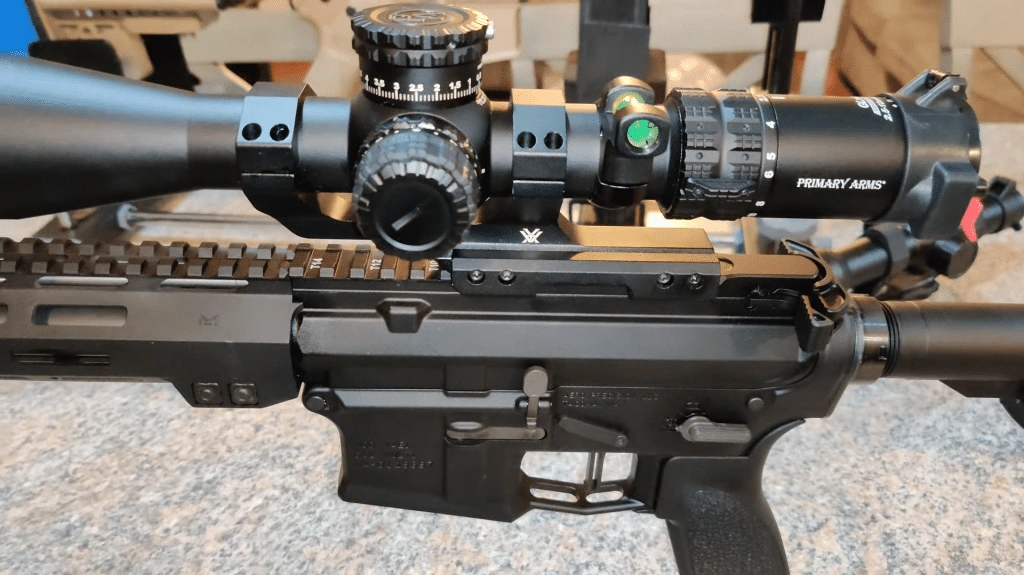
Yes, a rifle scope can be Cerakoted to change color or improve durability, but the process requires professional application. Gunsmiths use low-temperature H-Series (150–180°F) or air-cure C-Series Cerakote to prevent damage to internal seals, lenses, and electronics.
Can a Rifle Scope Be Cerakoted?
Rifle scopes absolutely can be Cerakoted, but the process differs greatly from coating other firearm parts. I’ve found that understanding these differences is essential for successfully applying this durable finish without damaging your valuable optic.
Why scopes need special treatment
Unlike rifle receivers or barrels, scopes contain delicate internal components that require gentle handling. The standard sandblasting preparation technique used on metal parts would potentially force abrasive media into the scope’s internal mechanisms, causing damage. Instead, professionals typically use Scotch-Brite pads for surface preparation, which achieves the necessary scuffing without risking the optic’s functionality.
Furthermore, precise masking becomes critical when working with scopes. The engravings, emblems, and particularly the lenses must be carefully protected during the Cerakote application process. This attention to detail ensures that only the desired areas receive coating.
Air-cured vs heat-cured Cerakote
When it comes to curing methods, you have two primary options for scope treatment. Air-cured Cerakote (C-series) eliminates heat exposure completely, making it traditionally safer for optics. Although less durable than heat-cured versions, many professionals still achieve excellent results with this method.
Heat-cured Cerakote offers superior durability but requires temperature modifications. Rather than the standard 250°F curing temperature, scopes must be cured at a lower temperature of 150°F for approximately two hours. This adjustment prevents damage to temperature-sensitive polymer components inside the scope.
Interestingly, some professional applicators have developed processes to safely use heat-cured formulas on premium optics from brands like Leupold, Steiner, Swarovski, and Zeiss without causing damage.
What makes scopes different from other parts
The primary distinction lies in the scope’s internal complexity. Unlike solid metal parts, scopes contain lenses, adjustment mechanisms, and polymer components that react differently to chemicals and heat.
Moreover, the value consideration matters significantly. As one professional noted, cheap $100 scopes pose little financial risk during Cerakoting, but expensive optics like Nightforce or Schmidt & Bender may actually lose value when customized. This resale factor sometimes leads professionals to discourage clients from coating premium optics.
Additionally, the application process requires specific expertise – first masking off lenses and turrets properly, then carefully scuffing the surface, followed by precise spraying technique. Getting these steps right determines whether your scope emerges from the process fully functional or compromised.
The Step-by-Step Cerakote Process for Scopes
Getting your rifle scope Cerakoted involves a straightforward yet specialized process. If you’re considering this enhancement for your optics, here’s exactly what happens from start to finish.
Step 1: Send in or buy your scope
You have two main options when acquiring a Cerakoted scope. First, send in your existing scope to a professional Cerakote service. This typically costs around $100 for the scope itself. Alternatively, purchase a new scope directly through a Cerakote service provider who can apply the finish before shipping it to you. Many services offer discounts on the Cerakote application when you purchase the scope through them.
Step 2: Include mounts and accessories
For a cohesive look, send in your mounts and other accessories alongside your scope. Most services include one set of mounts or accessories with your base price. Additional items like rings and bases generally cost about $20 per pair, with Talley-style rings running approximately $30. Don’t forget accessories like flip-up covers, sunshades, or sling swivels if you want everything color-matched.
Step 3: Choose your color or match your rifle
Simply tell the Cerakote provider either the specific color you want or what you’re trying to match. For color matching, you’ll need to specify what you’re matching to—perhaps your rifle’s existing finish. Most companies offer the full range of H-series Cerakote colors. Popular options include variations of bronze like Midnight Bronze, Burnt Bronze, or Barrett Bronze, which complement FDE (Flat Dark Earth) scopes and stocks.
Step 4: Coating and curing process explained
The actual coating process for scopes differs from standard Cerakote applications. Initially, technicians clean the scope with acetone and carefully mask lenses, turret markings, and other critical areas. Subsequently, they scuff the surface gently using Scotch-Brite pads instead of sandblasting to protect internal components. After spraying thin, even coats of Cerakote and allowing proper flash time between applications, the scope is cured at 150°F for two hours—much lower than the standard 250°F used for other firearm parts.
What to Expect from a Professional Cerakote Job
When ordering a professional Cerakote job for your rifle scope, knowing what to expect helps set realistic expectations for this custom service.
Turnaround time and shipping
Patience is required when sending your scope for Cerakoting. Most professional services have a turnaround time ranging from 3 to 6 weeks depending on current demand. Some shops might complete simpler jobs in 1-2 weeks, yet complex multi-color patterns naturally take longer. Occasionally, high-volume periods after sales or promotions can extend wait times even further. For time-sensitive projects, such as an upcoming hunting trip, contacting the provider beforehand for real-time estimates is advisable.
Color matching and finish quality
Reputable Cerakote applicators ensure excellent color matching between your scope and rifle. They mix colors precisely by weight, calculating the perfect ratio based on specific density—exactly as manufacturers do. This attention to detail provides nearly perfect matches to most rifles within equipment tolerance limits. Regarding durability, many services guarantee their work permanently. Nevertheless, even H-Series Cerakote will show wear over time in high-friction areas, and sharp impacts may cause damage despite its remarkable resilience.
Brands and scope types supported
Most professional Cerakote services can handle virtually all optic types. This includes scopes, red dots, range finders, and spotting scopes from premium brands like Leupold, Zeiss, Kahles, Swarovski, Steiner, Nightforce, Sig Sauer, Vortex, Nikon, and Burris. One important note: certain areas with rubberized components, typically eyepieces, cannot be coated and will remain in their original finish.
Mount sizing and hardware guidance
For comprehensive esthetics, consider sending your mounts alongside your scope. Professional services often recommend including all accessories you want color-matched with your optic. Since mounting hardware must precisely fit your particular setup, technicians familiar with various mount systems can provide valuable guidance on proper sizing and compatibility for your specific rifle configuration.
Common Questions and Concerns
Many gun owners raise questions about Cerakoting their valuable optics. Let’s address the most common concerns to help you make an informed decision.
Will Cerakote damage my scope?
Opinions among professionals vary considerably. Some applicators have developed methods for applying heat-cured Cerakote with zero damage even to premium brands like Leupold and Zeiss. In contrast, certain gunsmiths require customers to sign waivers acknowledging a 50/50 risk of damage. As a precaution, numerous experts recommend using air-dry C-series Cerakote for scopes to eliminate heat exposure altogether.
How long does the coating last?
Reputable applicators typically guarantee their work forever and will redo it at their expense if problems develop. Nonetheless, even H-Series Cerakote will show wear over time, especially at points of regular contact. Remember that Cerakote isn’t invincible—sharp edges or hard impacts may still damage the finish. Some shooters note that Cerakote appears more vulnerable to scratching than factory anodizing.
Can I Cerakote just the mounts or accessories?
Absolutely! Many owners choose to Cerakote only their scope mounts or rings. Professionals can easily tape off the inside of rings where contact with the scope occurs. One potential drawback: some reports indicate Cerakoted scopes may slip in Cerakoted rings due to reduced friction between surfaces.
What if I want to change the color later?
Changing colors raises several considerations. First, re-Cerakoting over existing Cerakote is technically possible. Yet, be aware that custom coating may significantly decrease resale value—many collectors prefer factory finishes.
Conclusion
Cerakoting your rifle scope offers a practical way to customize your optics while adding durability, though this process demands specialized knowledge. Most importantly, understanding the key differences between coating a scope versus other firearm parts ensures your valuable optic remains fully functional afterward. Temperature sensitivity stands out as the primary consideration – scopes require lower curing temperatures to protect internal components.
Professional Cerakote services provide the safest route for most gun owners. Their expertise with proper masking techniques and gentle surface preparation protects your investment. Additionally, these professionals can match colors perfectly to create a cohesive look across your entire rifle system.
Budget-conscious shooters might wonder whether the process justifies its cost. The answer depends largely on your priorities. Customization enthusiasts will appreciate the unique esthetic, while pragmatic hunters benefit from reduced glare and added protection against the elements. However, collectors should certainly consider potential resale implications before proceeding.