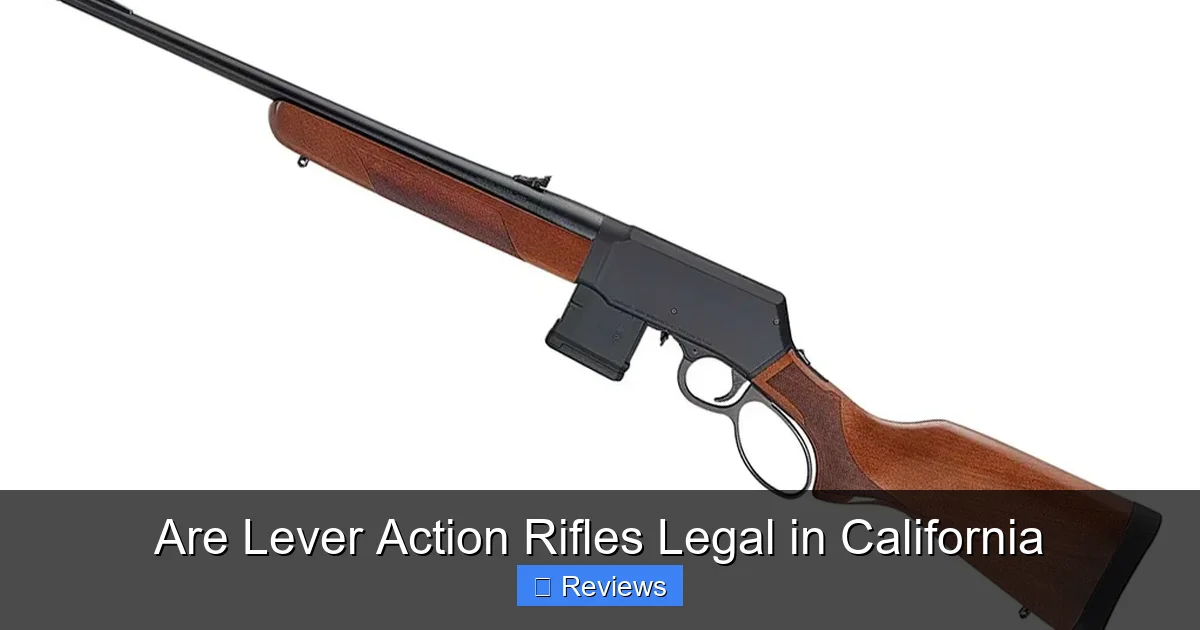
Good news for firearm enthusiasts in California: lever action rifles are generally legal! Unlike many other firearm types subject to strict “assault weapon” bans, the unique mechanical action and design of most lever action rifles typically exempt them from these regulations. However, understanding specific rules regarding magazine capacity, barrel length, and the transfer process is crucial for responsible ownership.
Hey there, fellow firearm enthusiast! If you’re living in California, you know that navigating the state’s gun laws can feel a lot like trying to decipher an ancient, mystical scroll. It’s often complex, ever-changing, and sometimes just plain confusing. This is especially true when it comes to specific types of firearms. So, you might be asking yourself: are lever action rifles legal in California?
It’s a fantastic question, and one that brings a sigh of relief to many who appreciate the classic, timeless appeal of a lever action. These rifles, often associated with the Old West, hunting, and a simpler time, hold a special place in the hearts of many shooters. Given California’s reputation for having some of the strictest gun control laws in the nation, it’s only natural to wonder if these beloved firearms have managed to escape the legislative chopping block. Let’s dive in and demystify the situation, so you can clearly understand where you stand.
The good news, right off the bat, is that for the most part, yes, many lever action rifles are legal in California! While the Golden State has famously banned numerous semi-automatic rifles under its “assault weapon” statutes, the unique mechanical design of lever actions typically allows them to bypass these restrictions. But as always with California law, “generally legal” doesn’t mean “no rules at all.” We’re going to explore the nuances, what to look out for, and how to stay on the right side of the law.
Key Takeaways
- General Legality: Lever action rifles are largely legal in California due to their manual, non-semiautomatic action, which typically exempts them from the state’s stringent “assault weapon” definitions.
- Assault Weapon Bypass: Their design, usually lacking detachable magazines and certain “evil features” like pistol grips or flash hiders, keeps them off the banned list that impacts many other firearm types.
- Magazine Capacity: While most lever actions have fixed tube magazines, be aware of the 10-round capacity limit for *any* firearm in California, though traditional tube magazines typically don’t exceed this.
- Standard Purchase Process: Acquiring a lever action rifle involves the standard California DROS (Dealer Record of Sale) process, including a background check and a 10-day waiting period.
- Storage and Transport: Owners must adhere to California’s strict safe storage laws (unloaded and locked) and proper transportation protocols (unloaded in a locked container).
- Stay Informed: California’s gun laws are dynamic. Always verify current regulations with reliable legal resources or a qualified FFL (Federal Firearm Licensee) before making any decisions.
Quick Answers to Common Questions
Are lever action rifles considered “assault weapons” in California?
No, generally not. Lever action rifles are manually operated, not semi-automatic, which typically exempts them from California’s “assault weapon” definitions that target semi-automatic firearms with specific features.
Do I need a Firearm Safety Certificate (FSC) to buy a lever action rifle in California?
Yes, you need a valid Firearm Safety Certificate (FSC) to purchase any rifle or shotgun in California, including lever action rifles.
Is there a waiting period for buying a lever action rifle in California?
Yes, there is a mandatory 10-day waiting period from the time you complete the DROS (Dealer Record of Sale) paperwork until you can pick up your lever action rifle from an FFL.
Can I add a pistol grip or other “evil features” to my lever action rifle in California?
While most lever actions don’t have these features, adding “evil features” (like a pistol grip or flash hider) to any rifle *could* potentially subject it to scrutiny, though it’s less of an issue for non-semi-automatic firearms. It’s best to keep your lever action in its traditional, compliant configuration.
What is the magazine capacity limit for lever action rifles in California?
California enforces a 10-round magazine capacity limit for all firearms. Most traditional lever action tube magazines naturally fall within this limit, but it’s important to verify the capacity of your specific rifle.
📑 Table of Contents
The Good News: Lever Action Rifles Generally Are Legal in California
Let’s start with the core reason why lever action rifles often get a pass in California: their operating mechanism. California’s “assault weapon” laws primarily target semi-automatic firearms that possess certain features deemed dangerous. These features often include pistol grips, flash suppressors, forward vertical grips, and detachable magazines. Lever action rifles, by their very design, rarely possess any of these “evil features” that trigger the ban.
Understanding California’s Assault Weapon Ban
California Penal Code sections related to “assault weapons” are incredibly detailed and extensive. They essentially define certain semi-automatic centerfire rifles, shotguns, and pistols as “assault weapons” if they have specific characteristics. For rifles, this often includes a semi-automatic action combined with a detachable magazine and one or more of the “evil features” (like a pistol grip, collapsible stock, flash hider, etc.). Even fixed-magazine semi-automatic rifles can be deemed “assault weapons” if their magazine capacity exceeds a certain limit (currently 10 rounds) and they have specific features.
The entire premise of these laws is to restrict firearms that are perceived to be easily concealable, rapidly reloadable, or designed for military combat. This is where the manual nature of lever actions becomes their saving grace. They simply don’t fit the profile.
Why Lever Actions Are Different
A lever action rifle is a manually operated firearm. This means that after each shot, the shooter must manually operate a lever (usually located around the trigger guard) to eject the spent casing and chamber a new round from the magazine. This is a fundamental distinction from semi-automatic firearms, which use the energy from the fired cartridge to automatically cycle the action and load the next round. Because lever action rifles are not semi-automatic, they fall outside the primary scope of California’s “assault weapon” bans.
Furthermore, most traditional lever action rifles feature a fixed tubular magazine located underneath the barrel, which is loaded one round at a time through a loading gate. This design is also a key factor. Since they don’t typically have detachable magazines (especially not easily removable ones that can be swapped out quickly), they avoid another major trigger for “assault weapon” classification. So, when people ask, “are lever action rifles legal in California?” the answer is often a resounding yes because of these mechanical and design characteristics.
Key Considerations: What Could Make a Lever Action Illegal?
While the general answer to “are lever action rifles legal in California?” is positive, it’s vital to remember that “generally legal” isn’t the same as “anything goes.” California’s laws are complex, and even an otherwise compliant firearm could become problematic if modified or if it possesses unusual characteristics. Here are some critical points to consider:
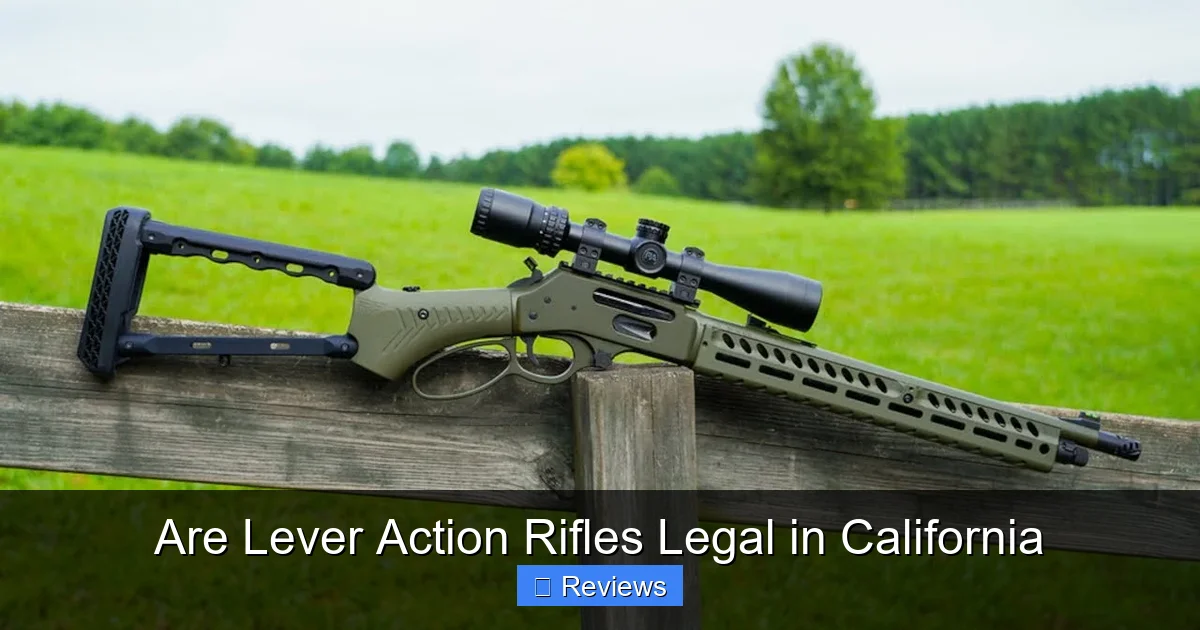
Visual guide about Are Lever Action Rifles Legal in California
Image source: i.ytimg.com
Magazine Capacity Limits
California has a strict 10-round magazine capacity limit for all firearms. This means that, regardless of the firearm type, you cannot legally possess, purchase, or manufacture a magazine that holds more than 10 rounds, with very few exceptions. For most traditional lever action rifles with tubular magazines, this isn’t an issue, as many common calibers (like .30-30 Win, .357 Mag, .44 Mag, .45-70 Gov’t) in standard barrel lengths naturally hold fewer than 10 rounds. For example, a Winchester 1894 in .30-30 might hold 6 or 7 rounds. However, some larger calibers or extremely long tubular magazines could potentially exceed this. Always check the specific capacity of your rifle’s magazine for the intended ammunition.
Practical Tip: If you encounter a lever action model with an unusually high capacity, always verify its legality regarding the 10-round limit before purchase. This is crucial for anyone wondering, “are lever action rifles legal in California?” if they have extended magazine tubes.
Overall Length and Barrel Length
Both federal and state laws dictate minimum overall length and barrel length for rifles. For a rifle, the barrel must be at least 16 inches long, and the overall length must be at least 26 inches. It is extremely rare for a commercially produced lever action rifle to fall below these minimums, as they are typically designed with full-length barrels for hunting and sport. However, converting a rifle into a pistol (e.g., a “Mare’s Leg” style short-barreled rifle/pistol) or drastically shortening a barrel without proper federal registration as a Short-Barreled Rifle (SBR) is illegal. In California, SBRs are generally banned for civilian ownership.
Ammunition Restrictions
While not specific to lever action rifles, California has various laws regarding ammunition. For instance, certain types of ammunition, such as tracer rounds or armor-piercing handgun ammunition, are restricted or illegal. Also, effective January 1, 2018, all ammunition purchases in California must go through a licensed vendor (FFL) and require a background check. This is an important step for any firearm owner in the state, including those whose “are lever action rifles legal in California” question has been answered affirmatively.
“Featureless” Design – A Non-Issue for Most Lever Actions
The concept of “featureless” rifles is a big deal for AR-15 style platforms in California, where owners modify their semi-automatic rifles to remove “evil features” to comply with the law. For lever action rifles, this entire discussion is largely irrelevant. Because they are not semi-automatic, they are generally not subject to the “evil features” test in the first place. You won’t typically find a lever action with a pistol grip, collapsible stock, or flash hider, so there’s no need to modify them to become “featureless.”
Purchasing and Owning Lever Actions in California
So, you’ve confirmed that are lever action rifles legal in California, and you’re ready to acquire one. What’s the process like? It follows the standard California procedure for long guns, with a few critical steps:
The DROS Process
When you purchase a firearm from a licensed dealer (FFL) in California, you’ll go through the Dealer Record of Sale (DROS) process. This involves filling out extensive paperwork, providing your California ID (or driver’s license), and undergoing a mandatory background check conducted by the California Department of Justice (DOJ). There is also a mandatory 10-day waiting period from the time you complete the DROS paperwork until you can pick up your firearm.
Safety Certificates and Background Checks
To purchase a handgun or rifle in California, you generally need a Firearm Safety Certificate (FSC). This requires passing a written test covering firearm safety rules and basic laws. You can obtain an FSC at most FFL dealers. The FSC is valid for five years. Even if you’re certain “are lever action rifles legal in California,” you still need to jump through these procedural hoops.
Private Party Transfers
If you’re buying a lever action from another private individual in California, the transaction must still go through an FFL. Both the buyer and seller must meet at the FFL, fill out the necessary paperwork, and undergo the background check and 10-day waiting period. This process ensures all firearms transfers are recorded and vetted by the state.
Responsible Ownership: Storage, Transportation, and Use
Even once you own a lever action rifle, your responsibilities don’t end. California has strict laws regarding how firearms must be stored and transported. Understanding these rules is just as important as knowing are lever action rifles legal in California.
Safe Storage Requirements
California law requires all firearms to be stored safely to prevent access by unauthorized individuals, especially minors. This typically means storing firearms unloaded and in a locked container or secured with a DOJ-approved locking device (like a trigger lock or cable lock) when not in direct control. If minors are present in the home, even stricter rules apply, often requiring firearms to be locked up at all times. Failing to secure a firearm can lead to severe legal consequences if it’s accessed by a minor or prohibited person.
Practical Tip: Invest in a good quality gun safe. It not only keeps your firearms secure from unauthorized access but also protects them from theft and fire. Always store ammunition separately if possible, or at least locked within the same secure container as the firearm.
Transporting Your Lever Action
When transporting a lever action rifle in a vehicle in California, it must be unloaded and stored in a locked container. This means a locked case, a locked toolbox, or even a locked trunk. The definition of a “locked container” is pretty broad, but it must prevent immediate access to the firearm. Ammunition can be stored in the same locked container as the firearm, but it must also be in its own container or box and separate from the firearm itself. Furthermore, handguns have specific rules about transport, so always be clear about the firearm type you are transporting.
Where You Can Legally Shoot
Knowing are lever action rifles legal in California is one thing; knowing where you can legally shoot them is another. You can typically shoot your lever action rifle at designated shooting ranges, on private property (with permission and ensuring a safe backstop and distance from occupied dwellings), or in specific public lands where target shooting is permitted (such as certain BLM land). Always check local county and city ordinances, as well as federal land regulations, before heading out to shoot. Discharging a firearm unlawfully can lead to serious legal trouble.
Staying Informed: The Ever-Changing Landscape of CA Gun Laws
California’s gun laws are notoriously dynamic. What is legal today might be restricted tomorrow, and new legislation is frequently introduced and passed. This constant evolution means that even if you’ve done your homework on “are lever action rifles legal in California” today, it’s crucial to stay vigilant.
Resources for Current Information
The best way to stay informed is to regularly check official sources. The California Department of Justice (DOJ) website is an authoritative source for current laws and regulations. Additionally, organizations dedicated to protecting Second Amendment rights in California (like the California Rifle & Pistol Association – CRPA) often provide excellent summaries and updates on legislative changes. Your local FFL dealer is also an invaluable resource, as they deal with these laws daily and can provide guidance on current compliance requirements.
Practical Tip: Sign up for newsletters from reputable California gun rights organizations. They often send out alerts about proposed legislation and changes to existing laws, helping you stay ahead of the curve.
The Importance of Due Diligence
Ultimately, the responsibility for compliance rests with the firearm owner. Never rely solely on hearsay or outdated information. If you’re unsure about a specific rifle, a modification, or a particular aspect of the law, consult with an FFL or a qualified attorney specializing in California firearm law. Their expertise can save you from unintentional legal pitfalls.
Conclusion
So, let’s circle back to our original question: are lever action rifles legal in California? The answer, thankfully, is a resounding “yes” for most common models. Their manual action and traditional design allow them to largely sidestep the state’s strict “assault weapon” bans that affect many other types of firearms. This makes them an excellent choice for hunting, target shooting, and recreational use for Californians who appreciate their heritage and utility.
However, responsible ownership in California extends far beyond initial legality. You must adhere to magazine capacity limits, follow strict purchasing procedures, ensure safe storage, and transport your firearm correctly. The Golden State’s legal landscape is ever-changing, so staying informed through reliable sources is not just recommended, it’s essential. Enjoy your lever action, but always do so with knowledge and respect for the law!
Frequently Asked Questions
Are all lever action rifles legal in California?
While the vast majority of traditional lever action rifles are legal in California due to their manual action, it’s crucial to check specific models for any unusual features or magazine capacities that might push them into a restricted category. Always perform due diligence for the specific firearm you’re interested in.
Do I have to register my lever action rifle in California?
No, California does not have a general registration requirement for long guns (rifles and shotguns) purchased by private citizens. However, all firearm purchases and transfers through an FFL are recorded by the state through the DROS process.
Can I transport my lever action rifle loaded in my car in California?
No. When transporting a lever action rifle in a vehicle in California, it must be unloaded and secured in a locked container. This rule applies to all firearms in a vehicle.
Can I buy a “Mare’s Leg” style short-barreled lever action in California?
“Mare’s Leg” style firearms can be complicated. If classified as a Short-Barreled Rifle (SBR), they are generally illegal for civilian ownership in California. Some might be classified as pistols, which have different, equally stringent laws. It’s critical to consult an FFL or legal expert regarding the legality of specific “Mare’s Leg” models.
Are antique lever action rifles treated differently under California law?
Antique firearms, as defined by federal law (manufactured before 1899), are generally exempt from some modern firearm regulations. However, California has its own interpretations and restrictions, so while they might be easier to acquire, rules regarding use, storage, and transport still apply. Always verify with an FFL.
What if I move to California with a lever action rifle I already own?
If you move to California with a legally owned lever action rifle, you must generally declare it to the California Department of Justice within 60 days of bringing it into the state. Ensure your firearm complies with California’s capacity and feature laws upon entry, as some modifications might be required for semi-automatic firearms, though less likely for lever actions.