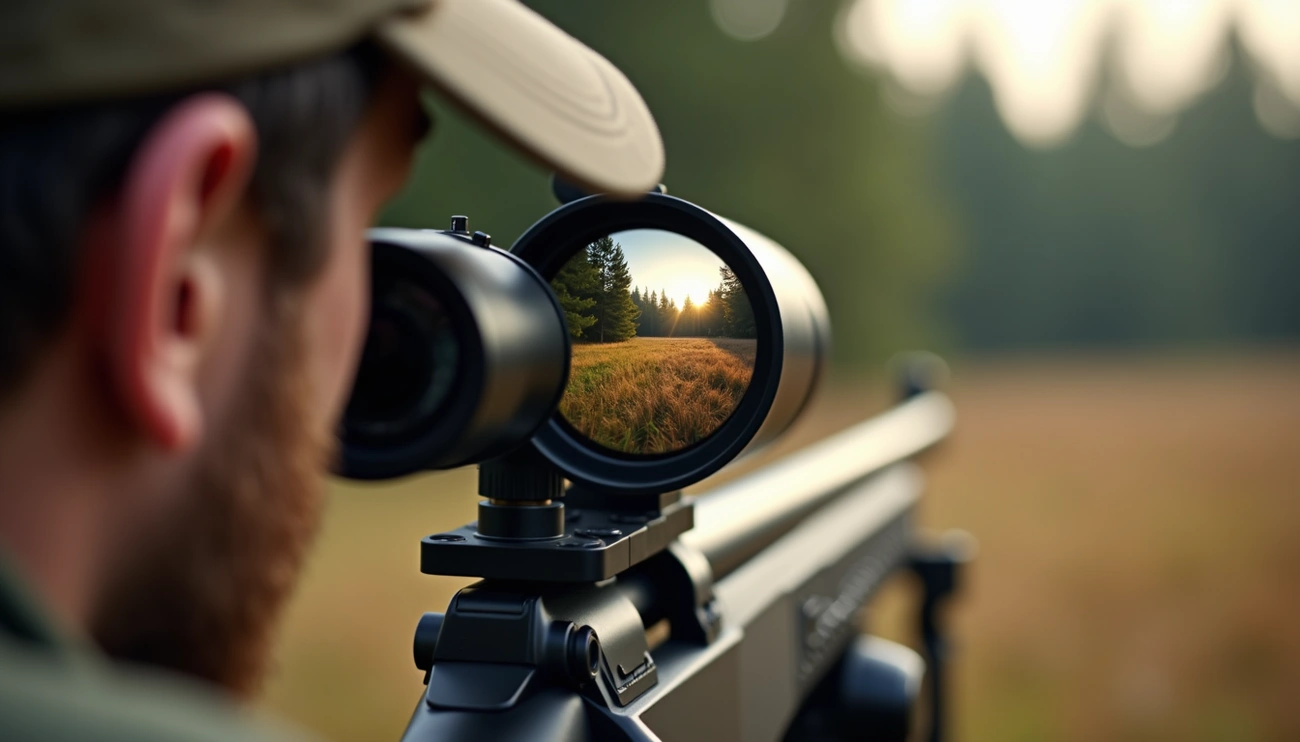
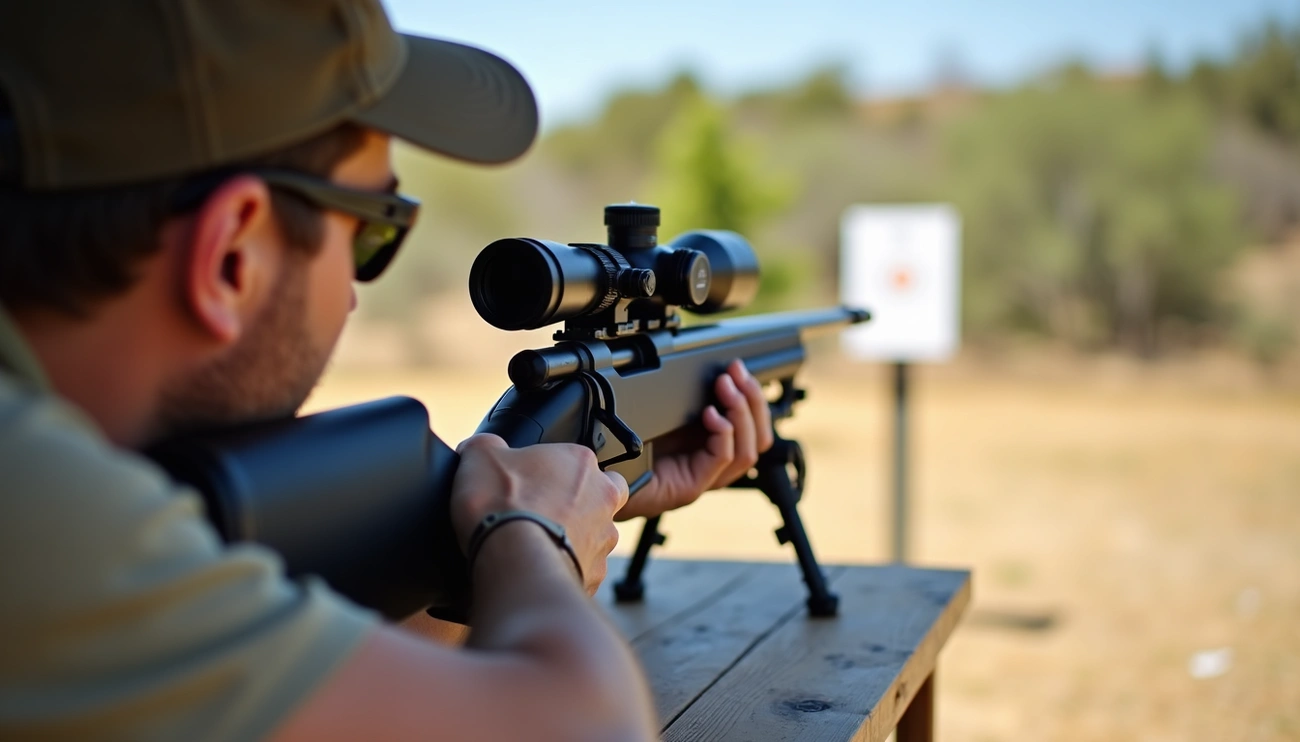
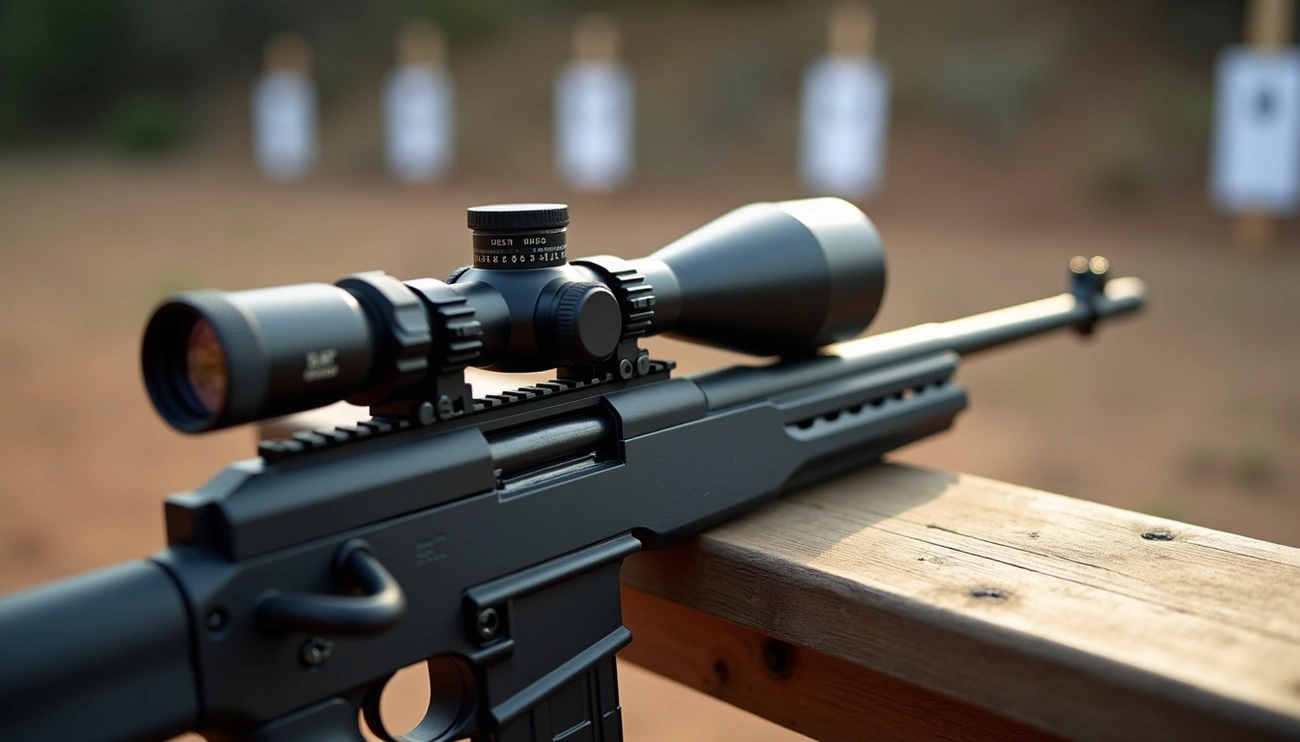
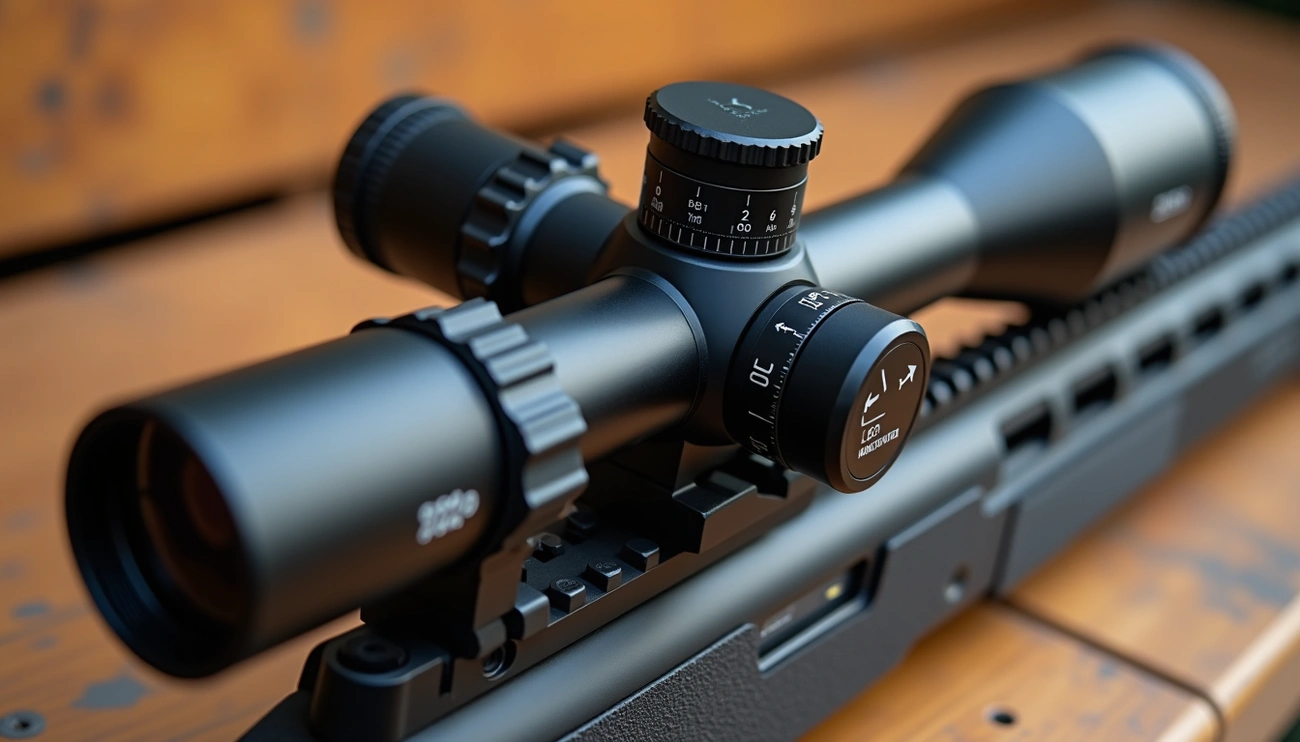
Side focus on a rifle scope is a side-mounted knob, usually on the left, that adjusts parallax by moving an internal lens. This adjustment places the target and reticle in the same focal plane, eliminates reticle shift, and ensures accuracy at varying distances, especially beyond 100 yards and at magnifications above 10x.
What is parallax and why it matters
Parallax is an optical phenomenon where the reticle (crosshairs) appears to move relative to your target when you shift your eye position behind the scope. This occurs because the reticle and target image are not focused on the same optical plane.
How parallax affects your aim
The misalignment between your scope’s reticle and target can cause significant accuracy problems. Even if your rifle remains perfectly still, moving your head slightly can shift your point of aim. This creates a critical problem – what you see through your scope doesn’t match where your bullet will actually land.
Furthermore, the impact of parallax compounds at distance. A minor error at 100 yards might create a miss by several inches or more at longer ranges. For precision shooters, even tiny discrepancies can mean the difference between hitting your mark and missing completely.
The speedometer analogy explained
Perhaps the most straightforward way to understand parallax is through the speedometer analogy. Imagine sitting in the passenger seat of a car and looking at the speedometer. From your angle, the needle appears to indicate a different speed than what the driver sees looking straight at it.
In this comparison, the needle represents your reticle, while the numbers on the dial represent your target. The driver, looking directly at the gage, gets an accurate reading. However, anyone viewing from an angle (like the passenger) sees a displaced reading – that’s parallax in action. Only when your eye is perfectly aligned with the scope’s optical center does parallax disappear.
When parallax becomes noticeable
Parallax remains relatively insignificant at shorter distances but becomes increasingly problematic as you extend your range. Most fixed-parallax scopes are set to be parallax-free at around 100-150 yards for centerfire rifles. Beyond these distances, particularly past 300 yards, parallax error grows more pronounced.
Additionally, higher magnification makes parallax more noticeable. As you increase your scope’s power, the field of view narrows, making any misalignment between reticle and target more apparent. This is primarily why scopes with magnification below 9x rarely include parallax adjustment features.
Ultimately, if your eye position shifts even slightly while aiming, and parallax is present, your shot placement will suffer – particularly during long-range precision shooting or when targeting smaller objects.
What is side focus on a scope
Side focus represents a modern solution for eliminating parallax error in rifle scopes through an accessible adjustment mechanism. Unlike fixed parallax scopes that come preset from the factory, side focus scopes allow shooters to fine-tune the optical alignment at various distances.
How side focus adjusts parallax
The side focus system works by introducing an additional lens between the objective lens group and the first focal plane. This special lens moves backward and forward inside the scope when you adjust the side focus knob. As a result, the target image shifts until it aligns perfectly with the reticle’s focal plane, effectively eliminating parallax error.
Consequently, when properly adjusted, both your target and reticle appear sharp simultaneously, regardless of your eye position behind the scope. Most importantly, the crosshairs remain locked on your aiming point even if you slightly shift your head position.
Side focus vs. adjustable objective (AO)
These two common parallax adjustment methods serve the same purpose through different mechanisms. Adjustable objective (AO) scopes feature a ring around the objective bell that directly moves the front lenses. In contrast, side focus uses an internal lens system controlled by a side-mounted knob.
Side focus offers several advantages over AO systems. Notably, it allows adjustments without changing your shooting position or reaching forward on the scope. Moreover, the side focus design tends to be more convenient for quick adjustments during hunting or field shooting.
AO systems, though, can provide more precise adjustments in some cases due to the larger rotation range available on the objective bell. Nevertheless, many shooters prefer the accessibility of side focus, especially those with arthritis or limited mobility.
Where the side focus knob is located
You’ll typically find the side focus knob positioned on the left side of the turret housing. This strategic placement allows for easy access without breaking your shooting position or lifting your head from the stock.
The knob resembles a third turret and includes distance markings that help you quickly set approximate parallax correction for your target distance. From there, you can make fine adjustments until perfect focus is achieved.
High-quality side focus systems, like those from TRACT, feature smooth, repeatable adjustment mechanisms that provide positive feedback as you turn the knob, letting you know exactly where you’re set. Some models also include locking mechanisms to prevent accidental adjustments during critical shots.
How to test and adjust side focus
Testing for parallax error in your scope is straightforward through a simple technique many shooters call “the head bob.” This practical method helps determine whether your side focus needs adjustment.
The head bob or nod test
To check for parallax, position your rifle securely and look through the scope at your target. Next, slightly move your head up and down or side to side while maintaining sight picture. If the reticle appears to “float” or move relative to your target, parallax error is present. Ideally, when parallax is properly corrected, your crosshairs should remain fixed on target regardless of minor head movements.
Step-by-step guide to adjusting side focus
- Secure your rifle in a stable position pointing at a target at known distance
- Set the side focus knob to the approximate yardage marked on your scope
- Look through your scope at maximum magnification (higher magnification makes parallax more noticeable)
- Perform the head bob test described above
- Rotate the side focus knob in both directions until the reticle remains stationary on target despite head movement
- Note: The actual setting that eliminates parallax may differ from the marked yardage on your scope
Common mistakes to avoid
Firstly, many shooters confuse side focus with reticle focus. Remember that side focus adjusts target clarity, not reticle sharpness. Another common error is overtightening scope rings, which can prevent proper side focus function. Occasionally, shooters unnecessarily readjust their parallax between every shot – once properly set for a specific distance, it typically needs no further adjustment until your target distance changes.
When and why you need side focus
The need for a side focus adjustment primarily emerges in two situations: when shooting at extended ranges or when using high-power magnification.
Long-range and high magnification use
Side focus becomes increasingly valuable beyond 150 yards, particularly when using magnification above 10x. At such distances, even minor parallax errors compound significantly—a 1-inch error at 100 yards can become a 6-inch miss at 600 yards. For precision shooting beyond 300 yards, parallax correction isn’t merely helpful; it’s essential for maintaining accuracy.
Hunting vs. target shooting scenarios
For target shooters, side focus provides critical precision when shooting from multiple positions or distances. In contrast, the average big game hunter might not require this feature as urgently. Of course, hunters taking long shots or frequently changing positions benefit from side focus’s accessibility—allowing adjustments without breaking shooting position. Meanwhile, bench shooters with stable platforms might find adjustable objective (AO) scopes perfectly adequate.
Do beginners really need it?
Beginners contemplating their first scope purchase should consider their shooting goals. Indeed, for those primarily shooting under 150 yards with magnification below 9x, parallax adjustment offers minimal benefits. For shooters planning to stay within typical hunting distances using moderate magnification, a fixed parallax scope (usually set at 100-150 yards) often suffices. Nevertheless, anyone aspiring to long-range precision or using higher magnification will eventually appreciate having side focus capability as their skills advance.
Conclusion
Understanding side focus represents a significant step toward improving your shooting accuracy, especially as you venture into longer distances. Side focus adjustments allow shooters to eliminate parallax error through a convenient knob typically located on the left side of the scope. This feature becomes particularly valuable when shooting beyond 150 yards or using magnification greater than 10x.
Most importantly, the decision to invest in a scope with side focus should align with your shooting goals. Hunters who rarely take shots beyond 200 yards might find a fixed parallax scope perfectly adequate for their needs. Conversely, precision shooters and those who frequently engage targets at varying distances will undoubtedly benefit from the flexibility side focus provides.
The head bob test remains your best friend when checking for parallax error. Simply secure your rifle, look through your scope, and move your head slightly. If your reticle stays fixed on target regardless of minor head movements, you’ve successfully eliminated parallax.