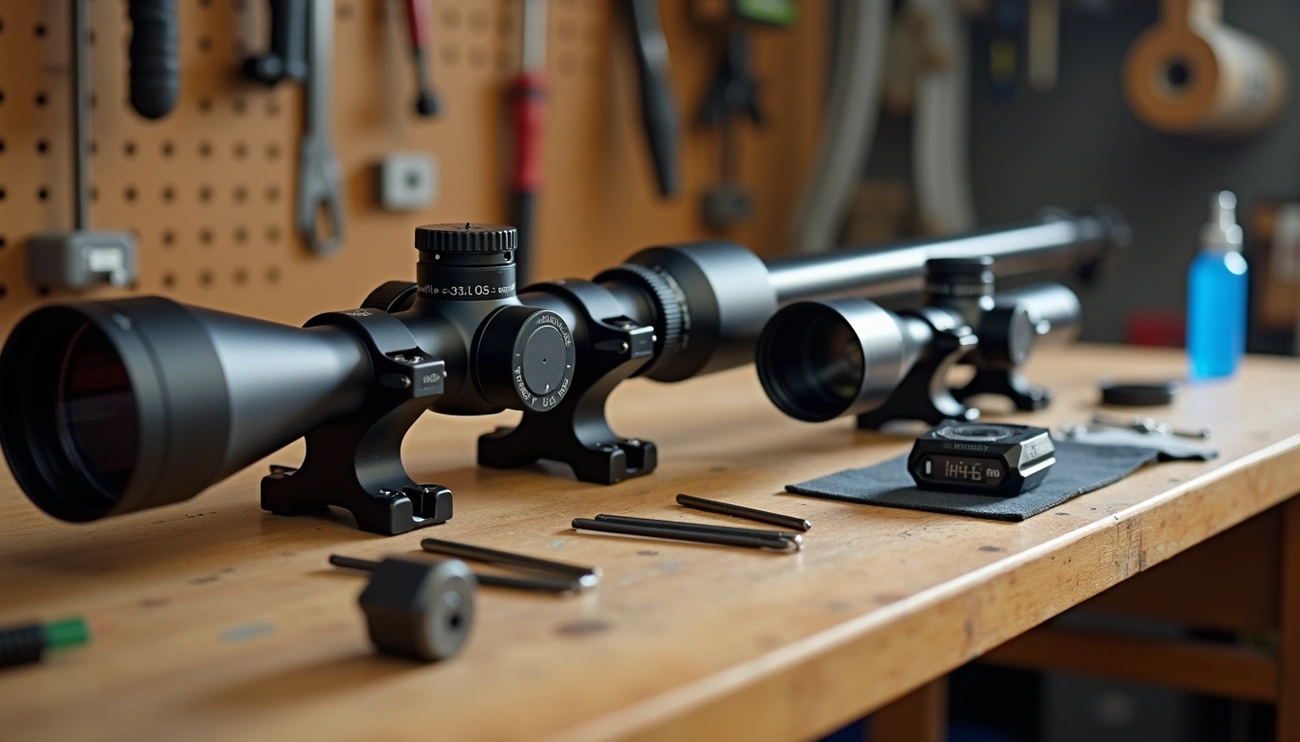
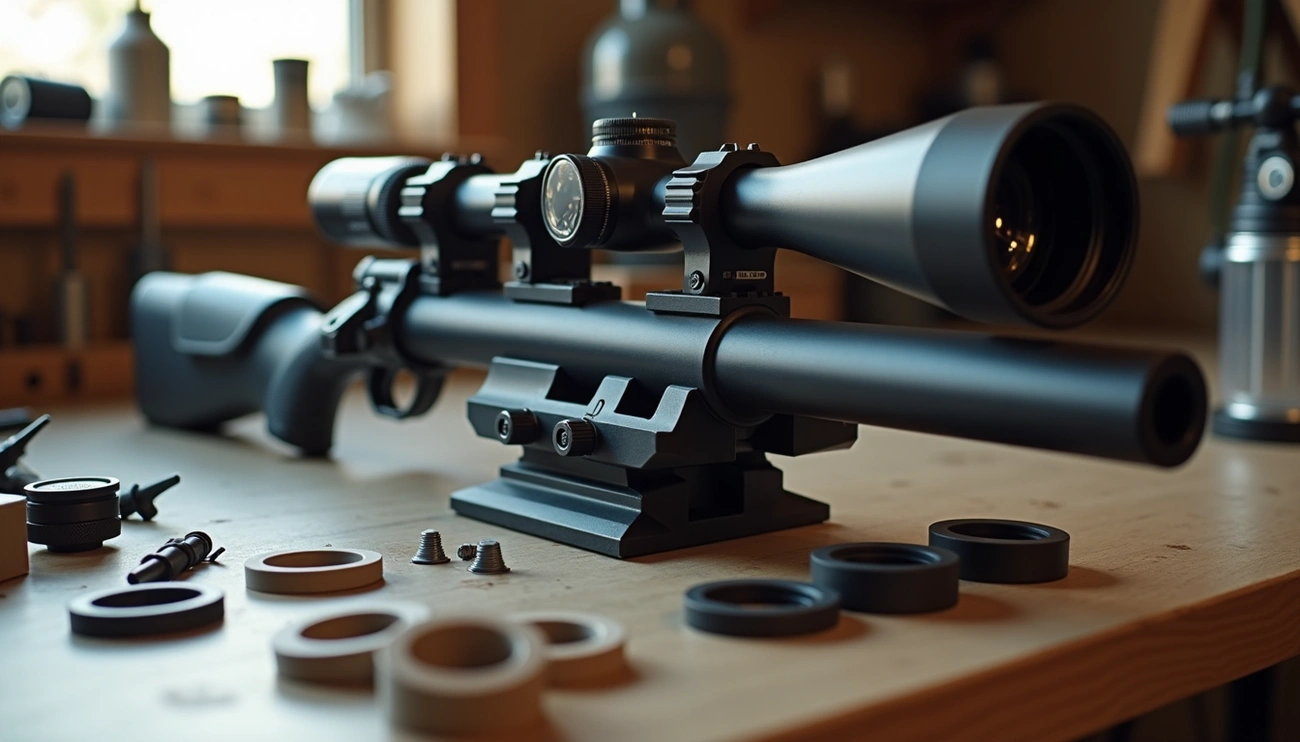
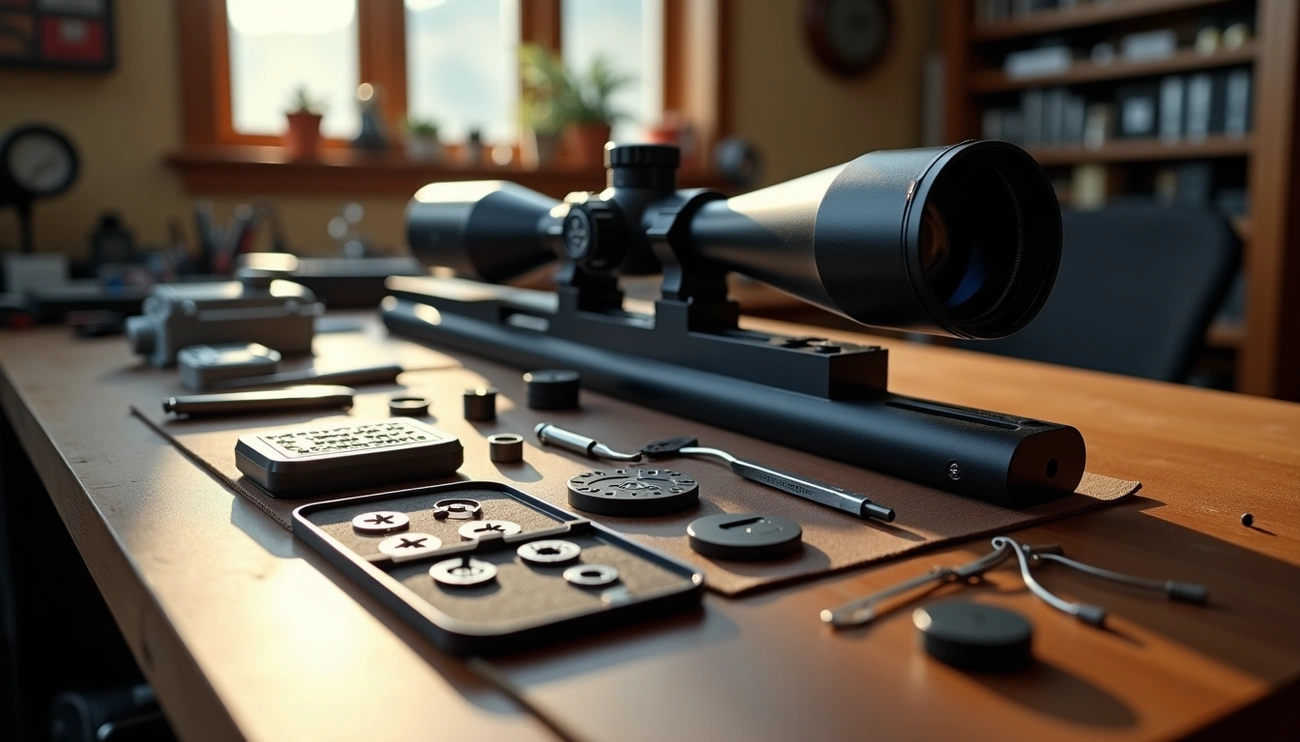
Rifle scope mounts are cantilevered to push the optic forward for proper eye relief on short, flat-top receivers like AR-15s. This forward offset ensures a natural cheek weld, maintains zero accuracy, and prevents mounting the scope across the receiver and handguard, which can cause alignment and stability issues.
What is a cantilever scope mount?
A cantilever scope mount is essentially a rigid structure that extends horizontally forward from its mounting point. Think of it as a single-piece mount where one end attaches to the rifle’s rail and the other end hangs freely, positioning your optic further ahead on the firearm.
How it differs from traditional scope rings
Traditional scope rings require direct attachment to your rifle’s rail and position the optic directly above the mounting point. Conversely, cantilever mounts integrate the base and rings into one solid unit with a forward offset. This one-piece construction provides superior rigidity and eliminates potential alignment issues between separate rings.
Traditional rings work wonderfully for bolt-action rifles with long rails, primarily because these firearms provide ample mounting space. However, for AR-platform rifles with limited rail real estate, cantilever mounts offer a practical solution.
Why the forward offset matters
The forward offset is the defining feature of cantilever mounts, typically extending 1.5 to 2.5 inches ahead of the mounting point. This design serves a critical purpose: it creates more distance between your eye and the scope’s ocular lens.
For AR-15s and similar firearms with relatively short receivers, this offset solves a fundamental problem. Without it, you’d need to either stretch your neck awkwardly or extend the stock to achieve proper eye relief. Furthermore, the cantilever design helps maintain a more natural, “heads-up” shooting position that reduces neck strain.
Common tube sizes and rail compatibility
Most cantilever mounts accommodate these standard scope tube diameters:
- 30mm (most common for modern optics)
- 34mm (typically for higher-end scopes)
- 1-inch (with inserts in some models)
Regarding rail systems, cantilever mounts generally attach to Picatinny rails, though some are compatible with Weaver-style systems as well. Mount height matters too—around 1.5 inches centerline height is typical for AR platforms, offering proper clearance for the charging handle.
The height and offset combinations make cantilever mounts particularly valuable for tactical applications, precision shooting, and hunting scenarios where rapid target acquisition is essential.
Key design features that make cantilever mounts unique
The engineering behind cantilever mounts reveals thoughtful design choices that make them stand out in the optics world. Modern cantilever mounts incorporate several key features that address specific shooting challenges, particularly for AR-platform owners.
One-piece construction for rigidity
Cantilever mounts are typically machined from a single piece of bar stock or billet, creating a monolithic structure that delivers superior stability. This one-piece design offers remarkable rigidity compared to two-piece alternatives. Many manufacturers use aerospace-grade 7075T6 aluminum alloy, striking an ideal balance between strength and weight.
The solid construction allows these mounts to withstand substantial recoil and harsh conditions without compromising zero. Notably, high-quality models maintain machining tolerances as precise as 3 microns (0.00011811″), ensuring exceptional accuracy for long-range shooting.
This monolithic approach solves a fundamental problem: maintaining alignment throughout extended shooting sessions or during tactical operations. The rigid foundation consequently prevents flexing that might otherwise affect accuracy during rapid firing sequences.
Integrated rings for alignment
Among the most valuable aspects of cantilever mounts is their integrated ring design. Rather than purchasing and aligning separate rings, the rings come perfectly aligned as part of the mount itself. This integration effectively eliminates potential misalignment issues that plague traditional setups.
Precision manufacturers take this integration a step further—some models feature final-bore matched rings with raw aluminum internals. This provides exceptional grip on the optic tube without damaging its finish. Moreover, vertical split rings found in many designs offer excellent scope tube contact, preventing zero shift during intensive use.
Quick-detach options for flexibility
Many premium cantilever mounts incorporate quick-detach (QD) systems that transform how shooters use their optics. These mechanisms allow for rapid removal and reinstallation without tools. The best QD systems maintain return-to-zero performance even after numerous removal cycles.
Advanced QD designs utilize dual-lever locking systems with push-button release mechanisms, providing rock-solid stability alongside operational simplicity. This functionality proves invaluable when switching between optics, using backup sights, or storing rifles in compact cases.
The true magic of quality QD mounts lies in their consistent return-to-zero capability—some models demonstrate remarkable consistency even after 100+ removal/reinstallation cycles, making them ideal for serious shooters who require flexibility without sacrificing precision.
Why use cantilever scope mount in real-world scenarios
Understanding when and where to use cantilever mounts transforms their theoretical advantages into practical benefits across various shooting disciplines.
Tactical shooting with AR platforms
Cantilever mounts excel in tactical environments, primarily when paired with Low Power Variable Optics (LPVOs) like 1-6x or 1-8x scopes on AR-15 rifles. The forward offset allows shooters to maintain a “heads up” position that substantially improves situational awareness and target acquisition speed. This configuration enables faster shooting from dynamic positions or while moving—critical for tactical applications.
Hunting in dynamic environments
For hunters, cantilever mounts provide exceptional stability and flexibility on modern hunting rifles. Their aircraft-grade aluminum construction ensures a lightweight yet rugged platform that holds zero under recoil and field conditions. The forward-reach design shifts optics ahead of scope rings for optimal eye-alignment, resulting in comfortable positioning throughout long hunting sessions without compromising rapid target acquisition.
Competitive shooting and rapid target acquisition
In competitive settings, cantilever mounts deliver precise alignment and swift target acquisition. The 2″ offset gets your head position and eye relief perfectly dialed in. Advanced designs offer up to 30% weight reduction while maintaining stability, keeping rifles portable without sacrificing performance. Some models feature unique split-ring designs with multiple accessory mounting surfaces, providing unparalleled flexibility for left and right-handed shooters alike.
How to choose the right cantilever mount for your rifle
Selecting the perfect cantilever mount requires careful consideration of several critical factors.
Check rail compatibility (Picatinny vs Weaver)
Picatinny rails feature .206-inch wide slots with consistent .394-inch spacing between centers, whereas Weaver slots are narrower at .180-inch with variable spacing. Although Weaver accessories often fit on Picatinny rails, the reverse isn’t usually true. For most modern firearms, including AR platforms, Picatinny rails have become the standard due to their superior stability and positioning advantages.
Match the mount height to your optic and eye level
The ideal mount height ensures your scope’s objective lens clears the barrel while allowing comfortable cheek weld. For AR-15 platforms, a centerline height around 1.5 inches typically provides optimal positioning. Lower mounts benefit precision rifles shot from prone or bench positions, yet higher mounts excel for standing or moving shooters.
Consider weight and material durability
Quality mounts utilize aircraft-grade aluminum—either 6061-T6 or 7075—balancing strength and weight. Weights vary considerably, from ultralight options at 3.27 ounces to more robust designs around 8 ounces. Lighter isn’t always better; sometimes additional weight provides necessary durability for demanding applications.
Brand reputation vs value options
Premium brands like ADM, LaRue, and Badger Ordnance ($150-200+) offer exceptional quality, whereas mid-tier options from Warne ($80-100) and Aero Precision provide excellent value. Budget-conscious shooters might consider Primary Arms Deluxe or UTG ACCU-SYNC mounts, recognizing that mount quality directly impacts optic performance.
Conclusion
Cantilever scope mounts prove far more purposeful than most shooters initially assume. Beyond their distinctive appearance, these mounts serve critical functions—especially for AR-platform owners facing limited rail space and eye relief challenges. Undoubtedly, their forward offset design solves real problems while providing stability that traditional ring mounts simply cannot match.
After exploring their unique features, we can see why cantilever mounts have become essential equipment for serious shooters. The one-piece construction eliminates alignment concerns while providing rock-solid rigidity under recoil. Additionally, integrated rings and quick-detach options offer convenience without sacrificing precision or return-to-zero capability.
Whether you’re a tactical operator, weekend hunter, or competitive shooter, cantilever mounts deliver measurable advantages across various shooting disciplines. Still, choosing wisely matters—rail compatibility, appropriate height, quality materials, and brand reliability should guide your selection process.